Tabla de contenido
Introducción
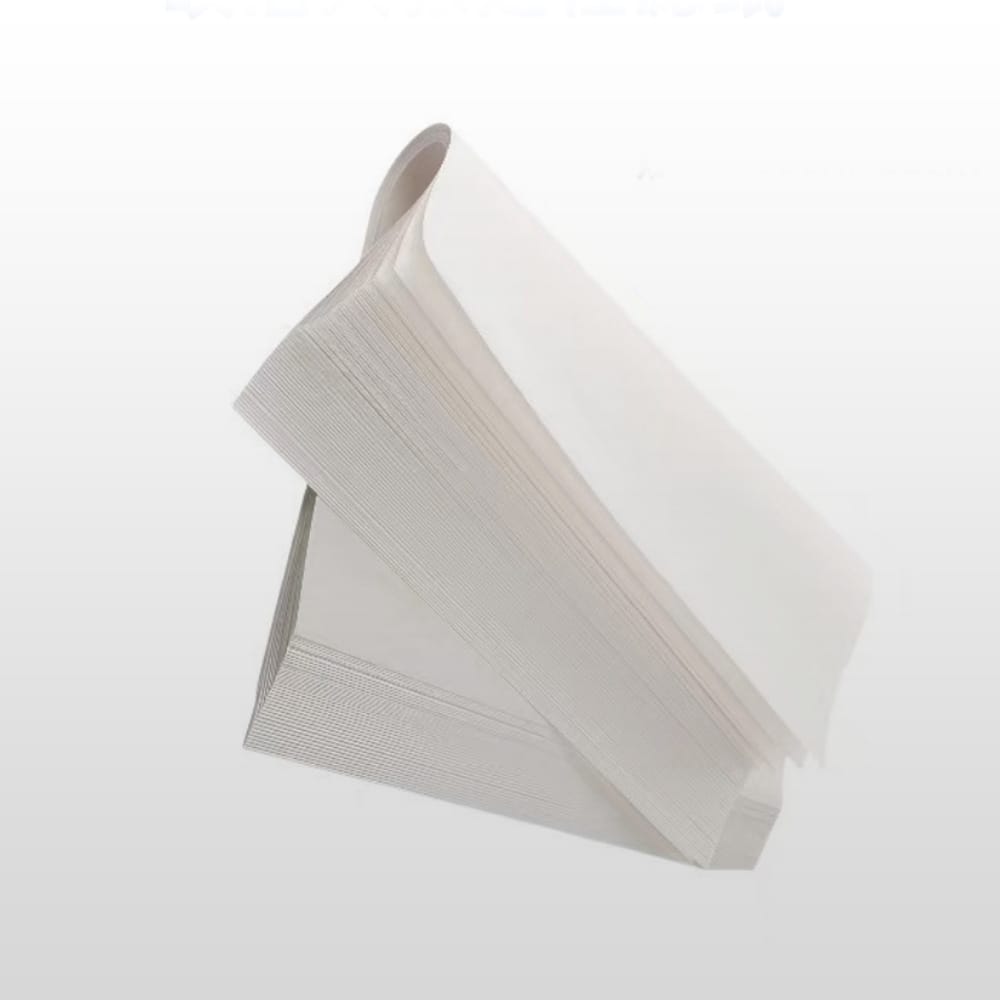
En el mundo de los análisis de laboratorio y las pruebas químicas, la precisión lo es todo. Entre las herramientas esenciales en las que los científicos e investigadores confían diariamente, el papel de filtro cuantitativo se destaca como un componente crítico para una filtración y preparación de muestras precisas. A diferencia del papel de filtro común utilizado en aplicaciones cotidianas, el papel de filtro cuantitativo está diseñado con una pureza y consistencia excepcionales para satisfacer las rigurosas demandas de la química analítica.
La evolución de la filtración de laboratorio se remonta a principios del siglo XX, cuando los científicos reconocieron la necesidad de medios filtrantes estandarizados y de alta pureza. Los papeles de filtro cuantitativos actuales han evolucionado dramáticamente, incorporando técnicas de fabricación avanzadas que garantizan un contenido mínimo de cenizas, una distribución uniforme de los poros y una resistencia superior a la humedad. Esta progresión los ha transformado de simples materiales filtrantes a instrumentos de precisión que impactan directamente en la exactitud de los resultados de laboratorio.
En esencia, el papel de filtro cuantitativo tiene un propósito fundamental: separar sólidos de líquidos introduciendo al mismo tiempo una contaminación mínima. Sus aplicaciones principales abarcan análisis de laboratorio, investigación química, desarrollo farmacéutico, monitoreo ambiental y control de calidad en la fabricación. Ya sea realizando análisis gravimétricos, determinando el contenido de humedad o preparando muestras para espectroscopia de absorción atómica, los investigadores dependen del rendimiento constante de estos papeles de filtro especializados.
Características clave del papel de filtro cuantitativo
Alta pureza y propiedades sin cenizas
La característica definitoria del papel de filtro cuantitativo es su contenido de cenizas excepcionalmente bajo, normalmente menos de 0,007% para los grados premium. Esta calidad “sin cenizas” se logra mediante rigurosos procesos de purificación que eliminan impurezas orgánicas, residuos metálicos y otros contaminantes que podrían interferir con las mediciones analíticas. Cuando el papel se incinera durante el análisis gravimétrico, prácticamente no queda ningún residuo, lo que garantiza que el peso medido corresponda únicamente al material filtrado y no al medio filtrante en sí.
Este nivel de pureza es particularmente crucial en aplicaciones donde incluso trazas de contaminación pueden afectar significativamente los resultados. Por ejemplo, en el control de calidad farmacéutica, el análisis de metales traza requiere medios filtrantes que no introduzcan falsos positivos. El proceso de fabricación implica múltiples etapas de lavado utilizando agua de alta pureza y, a veces, tratamientos ácidos para eliminar impurezas a nivel molecular.
Tamaño uniforme de poros y eficiencia de filtración
La filtración de precisión requiere resultados predecibles y reproducibles. El papel de filtro cuantitativo de alta calidad mantiene una distribución del tamaño de poro excepcionalmente consistente en cada hoja y en todos los lotes de producción. Esta uniformidad garantiza que las tasas de filtración permanezcan constantes, lo que permite a los investigadores estandarizar sus protocolos y lograr resultados reproducibles.
La estructura de los poros se diseña mediante técnicas especializadas de fabricación de papel que controlan la orientación y densidad de las fibras. Los diferentes grados ofrecen diferentes tamaños de poros, desde papeles de poros finos adecuados para retener partículas pequeñas hasta opciones de poros medianos para una filtración más rápida de precipitados más grandes. Esta variedad permite a los laboratorios seleccionar el grado óptimo para sus aplicaciones específicas, equilibrando la velocidad de filtración con la eficiencia de retención.
Resistencia y durabilidad para aplicaciones húmedas y secas
El papel de filtro cuantitativo debe mantener su integridad estructural tanto seco como cuando está saturado con líquido. La resistencia en húmedo de estos papeles es particularmente importante, ya que a menudo necesitan soportar el peso de los precipitados recogidos sin desgarrarse ni romperse. Los procesos de fabricación avanzados incorporan aditivos resistentes a la humedad que mejoran la durabilidad sin comprometer la pureza ni introducir contaminantes.
Esta durabilidad se extiende a la manipulación práctica en entornos de laboratorio. Los papeles resisten el desgarro durante el plegado, el arrugamiento para la formación de conos y la transferencia entre contenedores. Mantienen su forma durante procesos de filtración prolongados, incluso cuando se someten a presión de vacío en aplicaciones de embudo Büchner. Esta confiabilidad minimiza las fallas experimentales y reduce el desperdicio de material.
Cumplimiento de las normas ISO y ASTM
Las normas internacionales proporcionan puntos de referencia en cuanto a calidad y coherencia en los suministros de laboratorio. Los principales fabricantes garantizan que sus papeles de filtro cuantitativos cumplan con las especificaciones ISO y ASTM pertinentes, incluida la ISO 4094 para la determinación del contenido de cenizas y la ASTM E832 para los estándares de papel de filtro. El cumplimiento garantiza que los laboratorios de todo el mundo puedan confiar en las características de rendimiento de sus medios filtrantes, independientemente de su ubicación geográfica o variaciones en la cadena de suministro.
Estos estándares especifican parámetros como el contenido de cenizas, el peso base, el espesor, la porosidad y la resistencia mecánica. El cumplimiento de protocolos de prueba tan rigurosos garantiza que cada lote cumpla con criterios de calidad consistentes, lo que permite a los laboratorios mantener los requisitos de validación y los sistemas de gestión de calidad.
Tipos y grados de papel de filtro cuantitativo
Calificaciones estándar versus calificaciones especiales
Los papeles de filtro cuantitativos se clasifican en grados estándar y especiales, cada uno diseñado para aplicaciones de laboratorio específicas. Los grados estándar, como los grados 40, 41 y 42, ofrecen características de rendimiento equilibradas adecuadas para trabajos analíticos generales. Estos artículos suelen presentar una porosidad media y velocidades de filtración moderadas, lo que los convierte en opciones versátiles para procedimientos de laboratorio de rutina.
Los grados especiales abordan aplicaciones más exigentes que requieren propiedades específicas. Los grados de flujo rápido con poros más grandes aceleran la filtración cuando se procesan grandes volúmenes, mientras que los grados extrafinos proporcionan una retención de partículas superior para precipitados microscópicos. Algunos artículos especializados incorporan tratamientos para mejorar la resistencia en húmedo o la compatibilidad con productos químicos agresivos, ampliando su utilidad en entornos especializados de investigación y pruebas industriales.
Papel de filtro sin cenizas versus papel de filtro de bajo contenido de cenizas
Si bien todos los papeles de filtro cuantitativos presentan un bajo contenido de cenizas, el grado de pureza varía según los grados. Los papeles de filtro sin cenizas representan la categoría de mayor pureza, con un contenido de cenizas típicamente inferior a 0,007%. Estos papeles premium son esenciales para análisis de trazas y aplicaciones que requieren la máxima sensibilidad. Su residuo ultrabajo garantiza mediciones gravimétricas precisas incluso cuando se trabaja con cantidades mínimas de material.
Los papeles de filtro con bajo contenido de cenizas, con un contenido de cenizas ligeramente mayor (a menudo hasta 0,1%), ofrecen alternativas rentables para aplicaciones donde la pureza extrema no es crítica. Estos papeles mantienen un excelente rendimiento de filtración al tiempo que reducen los costos de material para pruebas de rutina donde un mayor contenido de cenizas no comprometerá la precisión del resultado. La elección entre grados sin cenizas y con bajo contenido de cenizas depende de los requisitos específicos del procedimiento analítico y de la sensibilidad del método de detección.
Tamaños y formas comunes utilizados en los laboratorios
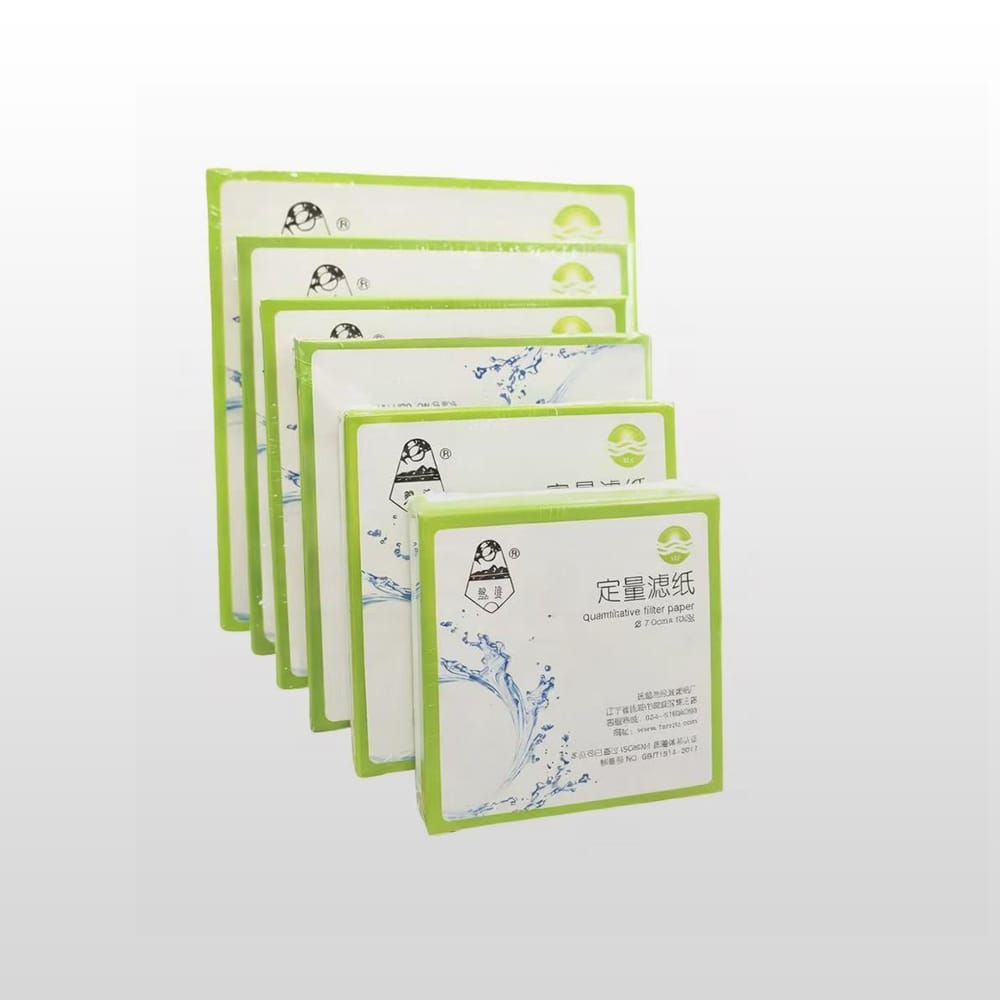
Los papeles de filtro cuantitativos están disponibles en varios tamaños y formas para adaptarse a diferentes equipos y protocolos de laboratorio. Las láminas circulares en diámetros que van desde 7 cm a 24 cm son estándar para la filtración por gravedad mediante embudos. Estos tamaños corresponden a dimensiones comunes del embudo, lo que garantiza un ajuste adecuado y un rendimiento de filtración óptimo.
Las láminas cuadradas ofrecen versatilidad para configuraciones de plegado personalizadas y aplicaciones especializadas. Los círculos precortados y las hojas rectangulares aceleran los flujos de trabajo de alto rendimiento donde la coherencia y la velocidad son prioridades. Algunos fabricantes proporcionan formas troqueladas personalizadas para equipos específicos o sistemas automatizados, mejorando aún más la eficiencia operativa en laboratorios industriales.
La elección del tamaño afecta a la dinámica de filtración: los diámetros más grandes proporcionan una mayor superficie para una filtración más rápida, pero requieren embudos más grandes y más volumen de filtrado. Las láminas más pequeñas conservan materiales y son adecuadas para procedimientos analíticos a microescala. Los laboratorios deben equilibrar estos factores en función de sus requisitos de flujo de trabajo específicos y limitaciones de equipo.
Papel de filtro cuantitativo papel de filtro versus papel de filtro cualitativo

Comprender la distinción entre papel de filtro cuantitativo y cualitativo es crucial para seleccionar el material apropiado para aplicaciones de laboratorio. Si bien ambos tienen fines de filtración, sus prioridades de diseño y características de rendimiento difieren significativamente según los usos previstos.
表格
| Característica | Papel de filtro cuantitativo | Papel de filtro cualitativo |
|---|---|---|
| Propósito primario | Pruebas y mediciones analíticas | Separación y aclaración general |
| Contenido de cenizas | Menos de 0,1% (a menudo <0,007%) | Mai sus, típicamente 0,1-0,3% |
| Nivel de pureza | Alta pureza, mínimos contaminantes | Pureza estándar para uso general |
| Uniformidad de poros | Distribución de poros altamente consistente | Porosidad menos uniforme y variable |
| Aplicaciones | Análisis gravimétrico, análisis de trazas, pruebas cuantitativas | Filtración de rutina, separación cualitativa, laboratorios de enseñanza |
| Costo | Mayor debido al procesamiento especializado | Menor, económico para uso a granel |
| Estándares de calidad | Se requiere cumplimiento ISO/ASTM | Especificaciones menos estrictas |
| Usuarios típicos | Laboratorios de investigación, empresas farmacéuticas, instalaciones de pruebas | Instituciones educativas, control de calidad industrial |
Las diferencias centrales en precisión y contenido de cenizas dictan sus respectivas aplicaciones. El contenido mínimo de cenizas del papel de filtro cuantitativo lo hace indispensable para el análisis gravimétrico donde se pesa el residuo del filtro. El papel de filtro cualitativo, con mayor contenido de cenizas, introduciría errores de medición en tales procedimientos, pero funciona adecuadamente para tareas generales de separación donde la precisión del peso no es crítica.
La elección entre los dos tipos depende de los requisitos analíticos. Para aplicaciones que exigen mediciones precisas, análisis de trazas o cumplimiento normativo, el papel de filtro cuantitativo es la opción necesaria. El papel de filtro cualitativo es suficiente para la aclaración rutinaria, la preparación de muestras para pruebas cualitativas o demostraciones educativas donde no se requiere una precisión extrema.
Aplicaciones del papel de filtro cuantitativo en laboratorios
Análisis gravimétrico
El análisis gravimétrico representa una de las aplicaciones más importantes del papel de filtro cuantitativo. En esta técnica analítica clásica, la masa de un precipitado determina la concentración de un analito en una muestra. El papel de filtro sirve como medio de recolección, capturando el precipitado y permitiendo el paso del filtrado. Después de la filtración, el papel con el precipitado recogido se seca y, a menudo, se incinera hasta alcanzar un peso constante.
La propiedad sin cenizas del papel de filtro cuantitativo es fundamental en este caso. Cuando el papel se quema durante el proceso de incineración, prácticamente no queda ningún residuo, lo que garantiza que el peso medido corresponda exclusivamente al precipitado del analito. Esta precisión es fundamental para obtener resultados analíticos confiables. Las aplicaciones incluyen determinación de sulfato (como sulfato de bario), análisis de cloruro (como cloruro de plata) y cuantificación de metales en muestras ambientales.
Determinación del contenido de humedad
El análisis del contenido de humedad se basa en papel de filtro cuantitativo para la preparación de muestras en diversas industrias, incluido el procesamiento de alimentos, productos farmacéuticos y ciencia de materiales. El papel de filtro absorbe y elimina el exceso de humedad de las muestras antes de pesarlas, asegurando que las mediciones posteriores reflejen el contenido de humedad real en lugar de la humedad de la superficie.
En algunos protocolos, el propio papel de filtro sirve como medio de absorción, utilizándose cambios de peso antes y después de la absorción para calcular el contenido de humedad. La consistencia de la capacidad de absorción en los lotes de producción garantiza resultados reproducibles, un requisito crucial para el control de calidad y el cumplimiento normativo en industrias con estrictas especificaciones de contenido de humedad.
Filtración de precipitados y purificación de muestras
El papel de filtro cuantitativo desempeña un papel vital en la separación de precipitados de soluciones mediante numerosos procedimientos analíticos. Ya sea que se aíslen hidróxidos metálicos, compuestos orgánicos o sales inorgánicas, el medio filtrante debe capturar sólidos de manera eficiente y al mismo tiempo permitir un drenaje completo del líquido. La estructura uniforme de los poros garantiza características de retención consistentes en todos los lotes, lo que respalda la validación del método y los requisitos de reproducibilidad.
La purificación de muestras a menudo implica múltiples pasos de filtración, cada uno de los cuales requiere diferentes tamaños de poro para eliminar contaminantes progresivamente más pequeños. La disponibilidad de papeles de filtro cuantitativos en varios grados permite a los investigadores diseñar protocolos de purificación de varios pasos que producen muestras de alta pureza adecuadas para técnicas analíticas sensibles como HPLC, espectrometría de masas o espectroscopia de absorción atómica.
Pruebas Ambientales y Análisis de Agua
Los laboratorios ambientales dependen en gran medida de papel de filtro cuantitativo para análisis de agua y aguas residuales. Las aplicaciones incluyen la determinación de sólidos suspendidos totales (TSS), donde el filtro recolecta partículas de un volumen conocido de agua. El peso constante y el contenido de cenizas del papel de filtro garantizan una medición precisa de los sólidos suspendidos, un parámetro clave para el cumplimiento ambiental y la evaluación de la calidad del agua.
El análisis de metales pesados suele utilizar papeles de filtro para la preparación de muestras antes del análisis espectroscópico. El bajo contenido de metales del papel de filtro cuantitativo de alta calidad previene la contaminación que podría dar lugar a resultados falsos positivos en la detección de trazas de metales. Esta pureza es particularmente importante al analizar fuentes de agua potable o monitorear la contaminación ambiental a niveles regulatorios.
Aplicaciones de la industria farmacéutica y alimentaria
En la fabricación farmacéutica, el papel de filtro cuantitativo respalda los procedimientos de control de calidad durante toda la producción. Desde las pruebas de la materia prima hasta el análisis del producto final, los pasos de filtración garantizan la pureza de la muestra y eliminan las partículas que podrían afectar los resultados del ensayo. El cumplimiento de las normas farmacopeas (USP, EP, JP) hace que estos papeles sean aceptables para aplicaciones farmacéuticas donde los requisitos reglamentarios son estrictos.
Los laboratorios de la industria alimentaria utilizan papel de filtro cuantitativo para diversos análisis, incluido el contenido de humedad, la determinación de cenizas y la detección de contaminantes. La coherencia y confiabilidad de los documentos respaldan el cumplimiento de las normas de seguridad alimentaria y los estándares de calidad. Su uso se extiende al análisis nutricional, donde la separación y medición precisas de los componentes es esencial para el etiquetado y el control de calidad.
Cómo elegir el papel de filtro cuantitativo adecuado
Consideraciones sobre el tamaño de los poros y la velocidad de filtración
Seleccionar el tamaño de poro adecuado representa la decisión más crítica a la hora de elegir papel de filtro cuantitativo. El tamaño de los poros determina tanto la velocidad de filtración como la eficiencia de retención de partículas. Los papeles de poros finos capturan partículas más pequeñas pero se filtran más lentamente, lo que puede resultar problemático al procesar grandes volúmenes de muestra. Los papeles de poros gruesos ofrecen una filtración más rápida pero pueden permitir el paso de precipitados más pequeños, comprometiendo la eficiencia de la recolección.
La elección óptima depende de las características específicas del material que se filtra. Para precipitados gruesos o partículas grandes, los papeles de poro medio proporcionan una retención adecuada manteniendo al mismo tiempo una velocidad de filtración razonable. Los precipitados finos o suspensiones coloidales requieren papeles de poro fino para garantizar una recolección completa, incluso si la filtración lleva más tiempo. Algunos protocolos especifican los tamaños de poro recomendados según las propiedades del analito, lo que proporciona orientación para la selección.
Espesor, Diámetro y Capacidad de Absorción
El espesor del papel influye tanto en la resistencia como en la capacidad de absorción. Los papeles más gruesos generalmente ofrecen mayor resistencia mecánica y mayor capacidad de absorción, lo que los hace adecuados para aplicaciones que involucran grandes masas de precipitado o filtración húmeda al vacío. Sin embargo, un mayor espesor puede ralentizar las tasas de filtración y requerir tiempos de secado más prolongados en aplicaciones gravimétricas.
La selección del diámetro depende del tamaño del embudo y del volumen de líquido a filtrar. Los diámetros más grandes proporcionan una mayor superficie para una filtración más rápida, pero requieren más volumen de filtrado para garantizar la transferencia completa de solutos. Los diámetros más pequeños conservan los materiales pero pueden obstruirse más rápidamente al filtrar muestras con un alto contenido de partículas. Hacer coincidir el diámetro con el embudo garantiza un ajuste adecuado y una eficiencia de filtración óptima.
La capacidad de absorción afecta tanto al rendimiento de la filtración como a la precisión gravimétrica. Los papeles con mayor capacidad de absorción retienen más líquido, lo que puede interferir con las mediciones de peso si no se secan adecuadamente. Para aplicaciones gravimétricas, pueden ser preferibles papeles con menor capacidad de absorción para minimizar los factores de corrección, siempre que mantengan suficiente resistencia para la aplicación.
Compatibilidad con productos químicos y equipos de laboratorio
La compatibilidad química es esencial para evitar la degradación del papel o la contaminación de la muestra. La mayoría de los papeles de filtro cuantitativos son compatibles con soluciones acuosas y disolventes orgánicos comunes. Sin embargo, los productos químicos agresivos, como ácidos, bases o agentes oxidantes fuertes, pueden requerir papeles especializados con mayor resistencia química. El fabricante normalmente proporciona pautas de compatibilidad que especifican productos químicos aceptables y condiciones de exposición.
La compatibilidad del equipo implica hacer coincidir el papel de filtro con los aparatos de laboratorio. Los círculos estándar se adaptan a la mayoría de los embudos de laboratorio, mientras que los diámetros específicos corresponden a los tamaños de embudo de Büchner para la filtración al vacío. Las configuraciones preplegadas que aceleran los flujos de trabajo de alto rendimiento deben coincidir con las dimensiones del equipo. Algunos sistemas automatizados requieren formatos de hojas específicos o embalajes compatibles con alimentadores, lo que influye en la selección de especificaciones del papel.
Fabricantes confiables versus proveedores genéricos
La elección entre fabricantes establecidos y proveedores de genéricos afecta significativamente la consistencia y confiabilidad del producto. Los fabricantes de confianza invierten en sistemas de control de calidad que garantizan la uniformidad entre lotes, algo fundamental para la validación de métodos y los resultados reproducibles. Estas empresas suelen proporcionar especificaciones detalladas, certificados de análisis y servicios de soporte técnico que los proveedores de genéricos tal vez no ofrezcan.
Si bien los productos genéricos pueden ofrecer costos iniciales más bajos, la calidad inconsistente puede generar fallas experimentales, pérdida de tiempo y datos poco confiables. El costo real incluye no sólo el precio de compra sino también el impacto en la eficiencia del laboratorio, la precisión de los resultados y la posible necesidad de repetir los análisis. Para aplicaciones que exigen precisión y cumplimiento normativo, los fabricantes establecidos brindan garantía de calidad que a menudo supera los ahorros de costos iniciales.
Ventajas de utilizar papel de filtro cuantitativo de alta calidad

Garantiza resultados de laboratorio precisos
La principal ventaja de la alta calidad papel de filtro cuantitativo es su contribución a la precisión analítica. El contenido constante de cenizas, la estructura uniforme de los poros y las propiedades mecánicas confiables garantizan que la filtración introduzca una variabilidad mínima en los procedimientos analíticos. Cuando se controlan cuidadosamente todos los demás aspectos del método, la calidad del papel de filtro se convierte en un factor decisivo en la precisión del resultado.
Los resultados precisos son particularmente críticos en industrias reguladas donde la integridad de los datos debe resistir el escrutinio de las agencias reguladoras y los auditores de calidad. La documentación de trazabilidad y calidad proporcionada por fabricantes acreditados respalda este requisito, lo que demuestra que los medios filtrantes cumplen con criterios de rendimiento específicos. Esta documentación es esencial para la validación de métodos y el cumplimiento continuo de los sistemas de gestión de calidad.
Reduce los riesgos de contaminación
El papel de filtro cuantitativo de alta pureza minimiza la introducción de contaminantes durante la preparación de la muestra. Los metales traza, los residuos orgánicos u otras impurezas en papeles de filtro de menor calidad pueden interferir con técnicas analíticas sensibles, lo que genera falsos positivos, niveles de fondo elevados o fallas completas en el análisis. Los rigurosos procesos de purificación utilizados para los papeles de primera calidad eliminan estos contaminantes.
La reducción del riesgo de contaminación se extiende más allá de la pureza química para incluir contaminantes físicos como fibras sueltas o partículas. Los procesos de fabricación de calidad garantizan superficies limpias y un pelado mínimo, evitando la contaminación de partículas de las muestras. Esta limpieza es particularmente importante en aplicaciones que involucran microscopía, análisis de partículas o instrumentación sensible donde partículas extrañas comprometen los resultados.
Eficiencia de costos a largo plazo
Si bien el papel de filtro cuantitativo de alta calidad puede tener un precio más alto por unidad, la rentabilidad a largo plazo a menudo excede la de las alternativas más baratas. La reducción de fallas experimentales, menos análisis repetidos y un desperdicio de muestras minimizado contribuyen al ahorro general de costos. La confiabilidad de un rendimiento constante reduce la necesidad de resolución de problemas y ajustes de métodos, lo que ahorra un valioso tiempo al investigador.
En entornos de laboratorio de alto rendimiento, el costo de los experimentos fallidos se extiende más allá de los materiales para incluir pérdida de productividad, retrasos en los plazos y posible insatisfacción del cliente. La inversión en medios filtrantes de calidad rinde dividendos a través de una mayor eficiencia operativa y resultados más predecibles. Los administradores de instalaciones que evalúan el costo total de propiedad deben considerar estos factores al tomar decisiones de adquisición.
Fiabilidad para Investigación y Uso Industrial
Los laboratorios de investigación requieren materiales confiables que respalden la ciencia reproducible. Al publicar resultados o buscar patentes, los investigadores deben demostrar que sus métodos son confiables y reproducibles. La coherencia del papel de filtro cuantitativo de alta calidad contribuye a esta reproducibilidad al minimizar una fuente de variabilidad experimental.
Los laboratorios industriales enfrentan presiones adicionales, incluido el cumplimiento normativo, las auditorías de calidad y las expectativas de los clientes. La confiabilidad de los resultados analíticos impacta directamente las decisiones de calidad del producto y las presentaciones regulatorias. El uso de papel de filtro de fabricantes establecidos con sistemas de calidad documentados proporciona garantía de que este material crítico cumple con las especificaciones de rendimiento, lo que respalda los objetivos de calidad del laboratorio.
Consejos de mantenimiento y almacenamiento
Condiciones de almacenamiento adecuadas para mantener la pureza
Mantener la pureza de papel de filtro cuantitativo requiere condiciones de almacenamiento adecuadas. Los papeles deben conservarse en su embalaje original hasta su uso, protegidos del polvo, la humedad y los contaminantes transportados por el aire. Las condiciones ideales de almacenamiento incluyen control de temperatura (15-25°C) y control de humedad (40-60% de humedad relativa) para evitar la degradación del papel y cambios dimensionales.
Las áreas de almacenamiento deben estar libres de humos químicos que puedan contaminar el papel. Evite almacenar papel de filtro cerca de compuestos orgánicos volátiles, ácidos, bases u otros productos químicos que puedan ser absorbidos por las fibras de celulosa. Los gabinetes o cajones de almacenamiento dedicados con sellado adecuado brindan protección contra contaminantes ambientales y mantienen la calidad del papel durante toda su vida útil.
Técnicas de manipulación para evitar la contaminación
Las técnicas de manipulación adecuadas son esenciales para evitar la contaminación durante el uso. Se deben usar guantes al tocar papel de filtro para evitar la transferencia de aceites, sales u otros contaminantes de las superficies de la piel. Se pueden utilizar pinzas o pinzas para manipular papeles para aplicaciones sensibles donde se debe evitar incluso un contacto mínimo.
Las superficies de trabajo deben estar limpias y secas antes de colocar papeles de filtro. Evite colocar papeles sobre superficies que hayan estado expuestas a productos químicos o ambientes polvorientos. Al doblar papeles para la formación de conos, utilice manos o herramientas limpias y secas para evitar la contaminación de la superficie de filtración. Estas sencillas precauciones reducen significativamente el riesgo de introducir contaminantes externos que podrían comprometer los resultados analíticos.
Consideraciones sobre la vida útil y la caducidad
El papel de filtro cuantitativo tiene una vida útil limitada, que normalmente oscila entre 2 y 5 años, según las condiciones de almacenamiento y las especificaciones del fabricante. Con el tiempo, incluso el papel almacenado adecuadamente puede experimentar cambios sutiles en propiedades como la resistencia en húmedo o la capacidad de absorción. Para aplicaciones que exigen la máxima precisión, los laboratorios deben establecer procedimientos para monitorear la edad del papel e implementar programas de rotación.
Las fechas de vencimiento proporcionadas por los fabricantes ofrecen orientación para un rendimiento máximo. Si bien los papeles pueden seguir funcionando más allá de estas fechas, sus características de rendimiento pueden desviarse de las especificaciones. Para aplicaciones críticas o cumplimiento normativo, el uso de papel de filtro dentro de su vida útil designada garantiza el cumplimiento de métodos validados y estándares de calidad.
Compra de papel de filtro cuantitativo directamente del fabricante
Beneficios de comprar a un fabricante confiable
Comprar directamente al fabricante ofrece varias ventajas más allá de la calidad del producto. Las relaciones directas brindan acceso a soporte técnico, asistencia con aplicaciones y orientación para la selección de productos basada en requisitos de laboratorio específicos. Los fabricantes pueden ofrecer información sobre los grados óptimos de papel de filtro para aplicaciones particulares, ayudando a los laboratorios a mejorar sus métodos analíticos.
La compra directa también garantiza la autenticidad y trazabilidad del producto. Es posible que los productos del mercado gris o los revendedores no autorizados no proporcionen la misma garantía de calidad o documentación. Al tratar directamente con el fabricante, los laboratorios reciben productos genuinos con certificación completa, trazabilidad de lotes y acceso a documentación de control de calidad esencial para el cumplimiento normativo y la validación de métodos.
Pedidos al por mayor y especificaciones personalizadas
Los fabricantes pueden aceptar pedidos al por mayor con precios por volumen que reducen los costos unitarios. Las grandes instalaciones u organizaciones de sitios múltiples pueden negociar acuerdos de suministro que garanticen una disponibilidad constante de productos en todas las ubicaciones. Estos acuerdos pueden incluir precios garantizados, entrega prioritaria y capacidad de producción reservada para evitar interrupciones en el suministro.
Las especificaciones personalizadas son otra ventaja de las relaciones directas con los fabricantes. Los laboratorios con requisitos únicos, como diámetros específicos, tratamientos especiales o envases alternativos, pueden trabajar con los fabricantes para desarrollar soluciones personalizadas. Esta capacidad de personalización permite a los laboratorios optimizar sus flujos de trabajo y lograr características de rendimiento que no están disponibles en las líneas de productos estándar.
Garantizar el cumplimiento de ISO/ASTM
Las relaciones directas con los fabricantes brindan garantía del cumplimiento de ISO y ASTM a través de sistemas de calidad documentados. Los fabricantes mantienen protocolos de prueba integrales y registros de calidad que demuestran el cumplimiento de estos estándares. Cuando los laboratorios compran directamente, reciben el beneficio de este cumplimiento documentado sin la incertidumbre que puede acompañar a los productos de distribuidores intermedios o fuentes no autorizadas.
La documentación de cumplimiento generalmente incluye certificados de análisis, informes de pruebas y hojas de datos de seguridad de materiales. Estos documentos respaldan los sistemas de calidad de los laboratorios, los requisitos de validación de métodos y las inspecciones reglamentarias. Tener acceso directo a los registros de calidad del fabricante simplifica la preparación de la auditoría y demuestra la debida diligencia en la selección de materiales y la calificación de los proveedores.
Procedimientos de prueba y garantía de calidad
Los fabricantes implementan rigurosos procedimientos de garantía de calidad que van más allá de las simples pruebas de cumplimiento. El control estadístico de procesos monitorea los parámetros clave durante toda la producción, garantizando una calidad constante de un lote a otro. Las materias primas entrantes se someten a estrictos controles de calidad y los productos terminados reciben pruebas exhaustivas antes de su lanzamiento.
Algunos fabricantes ofrecen servicios de prueba adicionales, como pruebas de calificación personalizadas para aplicaciones específicas o estudios de envejecimiento acelerado para evaluación de estabilidad. Estos servicios brindan a los laboratorios una confianza más profunda en el rendimiento del producto en sus condiciones de uso específicas. El acceso directo a expertos en calidad del fabricante permite la resolución colaborativa de problemas cuando surgen requisitos inusuales.
Conclusión
El papel de filtro cuantitativo representa mucho más que un simple consumible: es un instrumento de precisión que influye directamente en la precisión analítica y la eficiencia del laboratorio. A lo largo de este debate, hemos explorado las características críticas que definen los medios filtrantes de calidad, desde las propiedades sin cenizas y la estructura uniforme de los poros hasta el cumplimiento de las normas internacionales. Estas características permiten las diversas aplicaciones que hacen que el papel de filtro cuantitativo sea indispensable en los laboratorios modernos.
La elección del papel de filtro influye significativamente en la precisión de los resultados, la confiabilidad del método y el rendimiento general del laboratorio. Si bien el costo inicial puede parecer una consideración menor en comparación con la costosa instrumentación analítica, no se puede subestimar el impacto de este consumible en la calidad de los datos y la eficiencia operativa. Los laboratorios que priorizan la calidad en la selección de medios filtrantes demuestran su compromiso con la excelencia en la ciencia analítica.
A medida que las técnicas analíticas continúan avanzando con requisitos cada vez mayores de sensibilidad y precisión, la importancia de los consumibles de laboratorio de alta calidad crece en consecuencia. Cuantitativo papel de filtro los fabricantes continúan innovando, desarrollando productos mejorados que satisfacen las necesidades cambiantes del laboratorio y al mismo tiempo mantienen las características fundamentales que hacen que estos artículos sean esenciales para un análisis preciso.
Para los laboratorios que buscan optimizar sus métodos analíticos, lo invitamos a comunicarse con nuestro equipo técnico para obtener recomendaciones de productos personalizadas y soporte de aplicaciones. Nuestra amplia gama de papeles de filtro cuantitativos, respaldados por décadas de experiencia en fabricación y un riguroso control de calidad, proporciona la base para resultados analíticos precisos y confiables. Ya sea que necesite calificaciones estándar para pruebas de rutina o artículos especiales para aplicaciones exigentes, ofrecemos soluciones adaptadas a sus requisitos específicos.
Explore las especificaciones de nuestros productos, solicite muestras para su evaluación o analice soluciones personalizadas para aplicaciones únicas. El éxito de su laboratorio depende de la calidad de cada componente de su flujo de trabajo analítico, asegúrese de que su papel de filtro esté a la altura de sus estándares de precisión y confiabilidad.
Preguntas frecuentes
P: ¿Cuál es la principal diferencia entre el papel de filtro cuantitativo y cualitativo?
R: El papel de filtro cuantitativo tiene un contenido mínimo de cenizas (normalmente menos de 0,1%) para un análisis gravimétrico preciso, mientras que el papel de filtro cualitativo tiene un mayor contenido de cenizas y está diseñado para fines de separación general donde la medición precisa no es crítica.
P: ¿Cómo afecta el contenido de cenizas a los resultados analíticos?
R: El bajo contenido de cenizas garantiza que cuando el papel de filtro se incinera durante el análisis gravimétrico, prácticamente no queden residuos, lo que significa que el peso medido corresponde únicamente al material filtrado y no al medio filtrante en sí.
P: ¿Qué tamaño de poro debo elegir para mi aplicación?
R: Seleccione el tamaño de los poros según las características del precipitado: poros finos para partículas pequeñas y retención completa, poros medianos para una filtración más rápida con retención adecuada de partículas más grandes.
P: ¿Cómo debería ser cuantitativo papel de filtro ¿estar almacenado?
R: Almacenar en embalaje original a 15-25°C con una humedad relativa de 40-60%, lejos de humos químicos, polvo y humedad para mantener la pureza y las características de rendimiento.
P: ¿Por qué es importante el cumplimiento de ISO/ASTM para el papel de filtro?
R: El cumplimiento garantiza una calidad y un rendimiento constantes en todos los lotes, lo cual es esencial para la validación de métodos, el cumplimiento normativo y los resultados analíticos reproducibles en entornos de laboratorio.