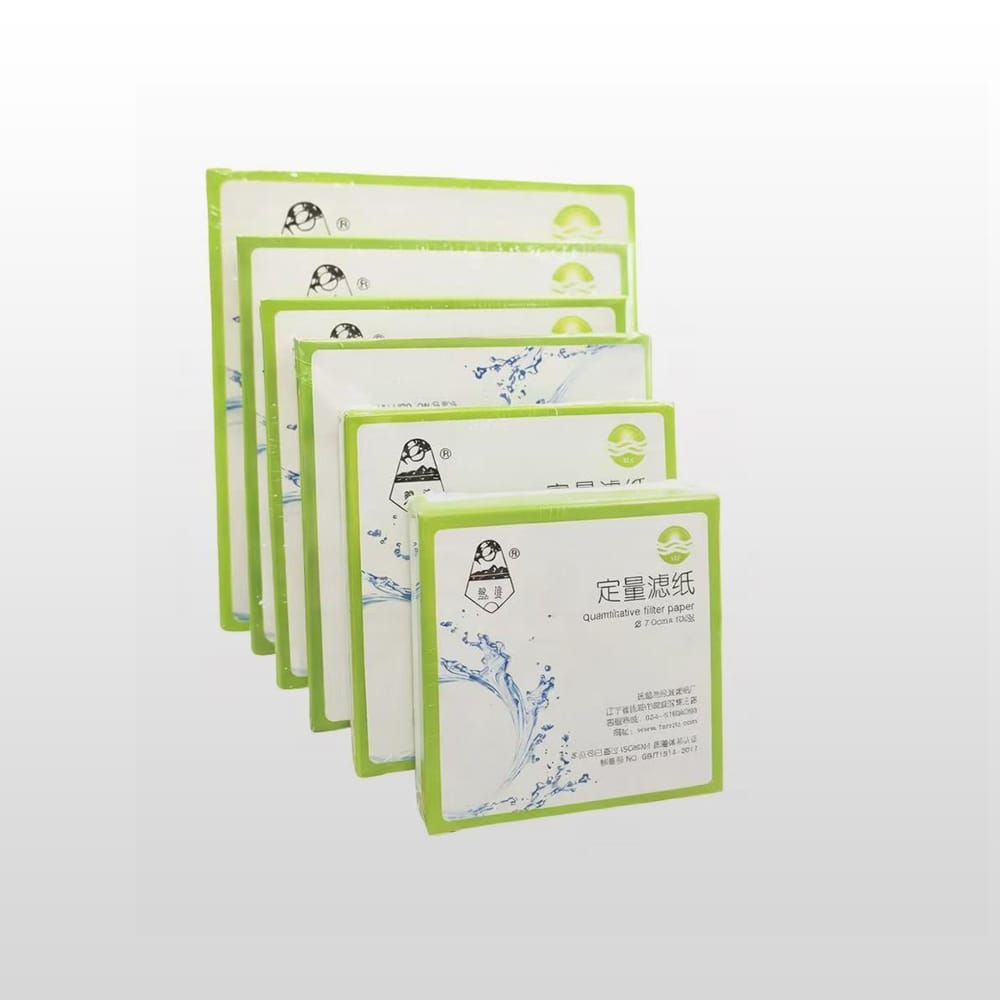
Фильтровальная бумага для количественного анализа
В этом документе в основном представлена классификация фильтровальной бумаги, а также характеристики, области применения, процессы производства качественной и количественной фильтровальной бумаги, что обеспечивает всеобъемлющую справочную информацию для соответствующих аналитических и испытательных работ.
1. Общий обзор фильтровальной бумаги
Фильтровальная бумага, как специализированный аналитический материал, в основном делится на качественный и количественный типы, С точки зрения скорости фильтрации, ее можно разделить на быстрый, средний и медленный типы; с точки зрения размера, общие спецификации включают d7cm, d9cm, d11cm, d12.5cm, d15cm и d18cm. Среди них фильтровальная бумага для количественного анализа предназначена для целей качественного анализа и тестирования, с широким применением в нескольких областях.
2. Области применения количественной фильтровальной бумаги
Фильтровальная бумага для количественного анализа широко используется в научных исследованиях, промышленности, сельском хозяйстве, медицине, здравоохранении и защите окружающей среды для целей качественного анализа и тестирования.
3. Ключевые характеристики и ограничения применения количественной фильтровальной бумаги
Количественная фильтровальная бумага обычно имеет более высокое содержание остаточной золы, что означает, что она пригодна только для общего качественного анализа и для фильтрации осадков или взвешенных веществ в растворах; его нельзя использовать для количественного анализа.
Обычно используется естественная фильтрация, основанная на структуре бумаги и ее способности задерживать твердые частицы для отделения жидкостей от твердых веществ.
4. Преимущества процесса производства и материалов количественной фильтровальной бумаги
Количественная фильтровальная бумага изготавливается из высококачественного хлопка премиум-класса с использованием современных, уникальных процессов изготовления бумаги и современного оборудования для производства бумаги. Это чистая хлопчатобумажная бумага, характеризующаяся высокой чистотой, однородной текстурой, определенной скоростью фильтрации и определенным уровнем прочности.