Table of Contents
Microscope lens paper is one of the most overlooked yet essential items in laboratory environments, especially in places where optical instruments are used daily. Although small and lightweight, this material plays a vital role in protecting precision microscope lenses from scratches, stains, and contamination.
As a professional manufacturer of microscope lens paper, we understand how the quality of each sheet impacts the long-term performance of microscopes, objective lenses, and other sensitive optical components. This article explains what microscope lens paper is, why it is necessary, how to use it correctly, and how laboratories can choose the right type for safe and effective optical maintenance.
Understanding Microscope Lens Paper and Its Core Functions
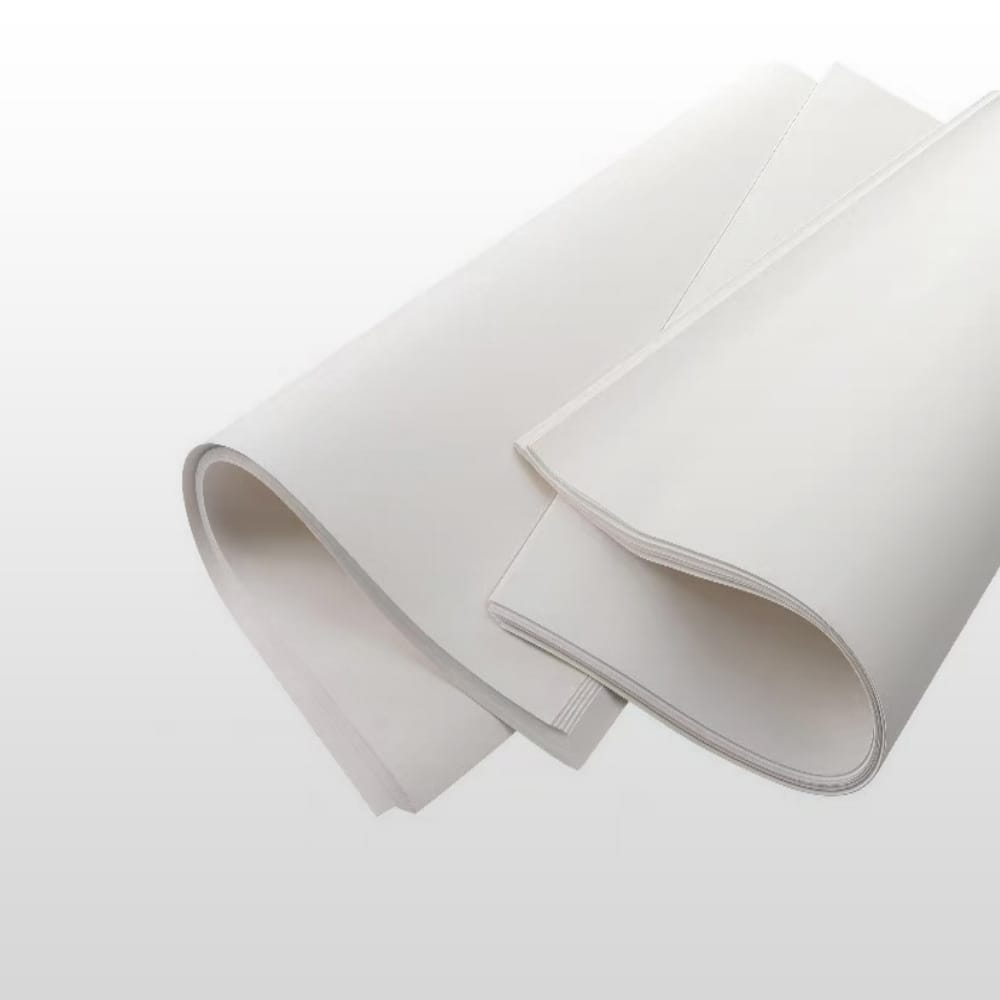
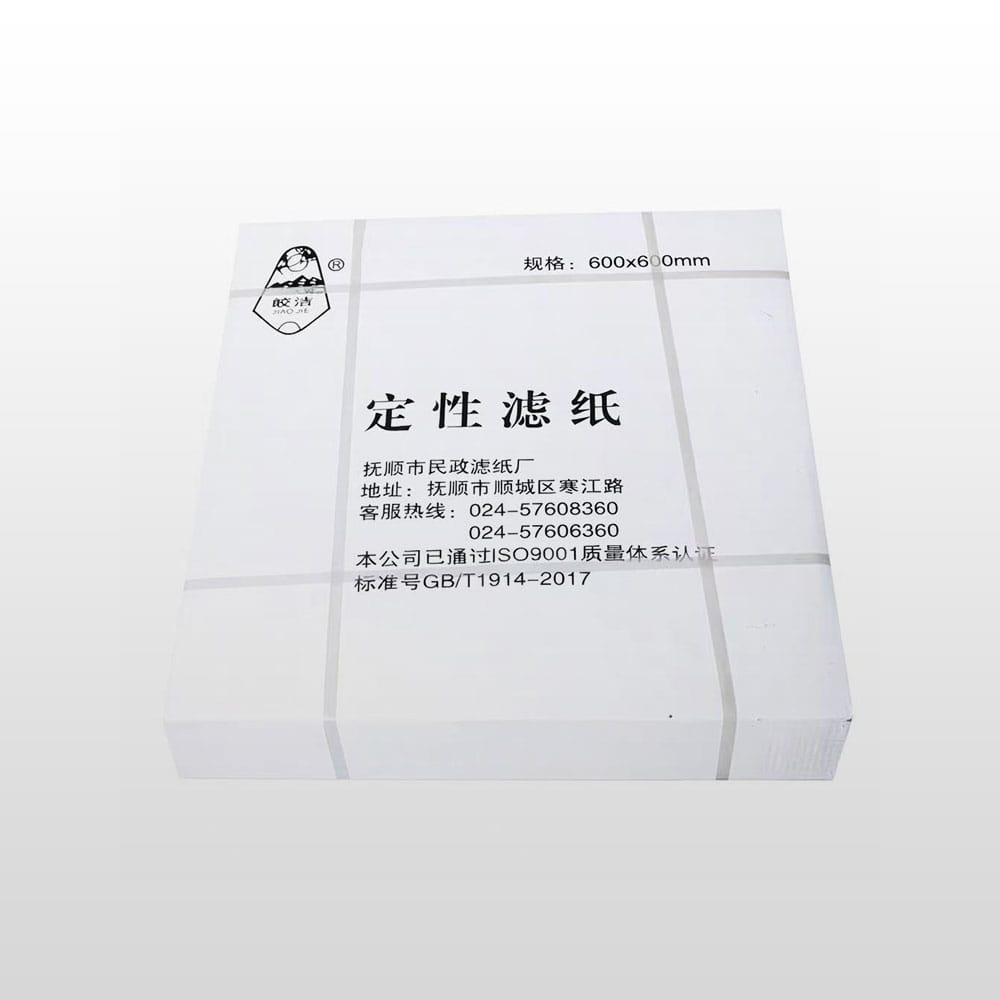
Microscope lens paper is a specially engineered cleaning material designed for optical surfaces. Unlike conventional tissue paper, it is non-abrasive, ultra-soft, and lint-free, making it safe for delicate surfaces such as microscope objectives, eyepieces, and condenser lenses.
What Makes Lens Paper Different from Regular Tissue
Regular tissues contain fibers, additives, and sometimes fragrances that can scratch or damage coated optical surfaces. Microscope lens paper, on the other hand, is chemically pure and free of contaminants.
Why Labs Prefer Lint-Free Lens Paper
Laboratories value lens cleaning tissue because it prevents residue buildup, streaks, and fiber shedding—common issues when using inferior materials.
The Role of Lens Cleaning Tissue in Optical Maintenance
Whether it is a teaching microscope or a high-end research instrument, maintaining clean optical surfaces ensures sharp images, accurate magnification, and reliable performance.
Key Materials and Properties of High-Quality Microscope Lens Paper
Not all lens cleaning tissues are made equally. The best-performing products share several essential characteristics.
Fiber Structure and Purity Requirements
Premium lens paper is manufactured using high-purity cellulose fibers that undergo multiple filtration processes to remove dust and fine particles.
Anti-Scratch and Non-Abrasive Protection
Microscope objective lenses are often coated with delicate protective layers. High-quality lens paper ensures these coatings remain intact.
What “Lint-Free” Really Means
True lint-free lens tissue leaves no residue even after multiple wipes, reducing the chance of streaks and ensuring crystal-clear visibility.
Comparison With Other Cleaning Options
Many people consider optical lens wipes or microfiber cloths as alternatives, but lens wipes can contain moisture unsuitable for some lenses, while microfiber cloths can trap debris and scratch surfaces if reused too often.
Why Lens Paper Matters for Microscope Performance and Lifespan
Improper cleaning techniques and unsuitable materials are among the leading causes of lens damage in laboratories.
Damage From Dust or Oil
Dust grains act like sandpaper under pressure. Meanwhile, fingerprints contain oils that degrade coatings.
The Importance of High-End Optical Safety
Coated lenses can lose their clarity if cleaned with the wrong materials. Lens paper protects the delicate surface without altering the coating.
Reduced Maintenance Costs
Using proper lens paper helps laboratories avoid expensive repairs and extend the overall lifespan of their microscopes.
How to Use Microscope Lens Paper Correctly (Step-by-Step Guide)
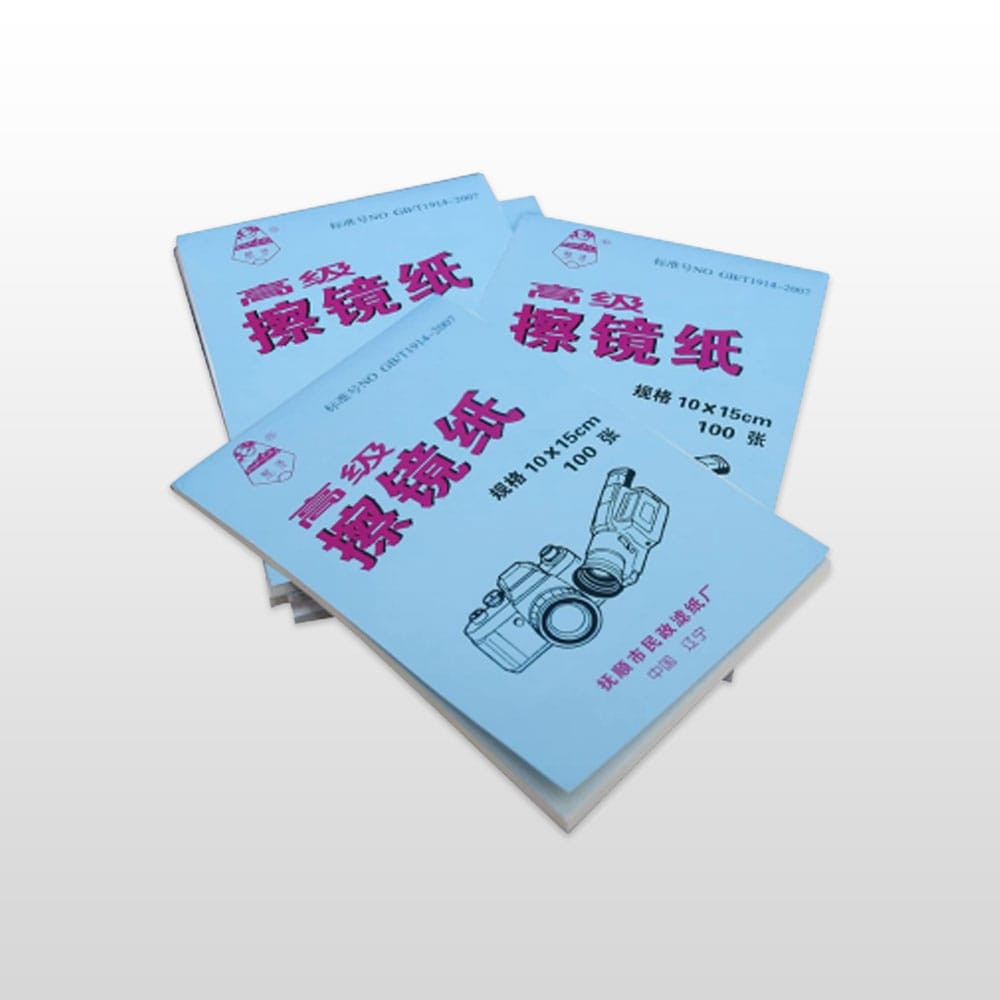
Proper usage is essential for optimal cleaning results.
Step-by-Step Cleaning Method
- Fold a sheet of lens paper once to increase thickness.
- Add a few drops of lens cleaning solution or alcohol if necessary.
- Wipe gently in a circular motion from the center outward.
- Avoid excessive pressure.
- Discard after use—never reuse lens paper.
Recommended Cleaning Materials
High-quality microscope objective cleaning paper paired with 70–90% ethanol is ideal for removing tough stains.
Common Cleaning Mistakes to Avoid
- Using cotton cloth
- Reusing microfiber cloths
- Applying too much pressure
- Using tap water or household cleaners
Our Manufacturing Process for Premium Microscope Lens Paper
As a dedicated manufacturer, we place strong emphasis on quality, consistency, and safety.
Raw Material Selection
We select purified cellulose with optical-grade purity to ensure the final product contains no abrasive particles.
Precision Production Technology
Each roll is processed to maintain uniform thickness and softness while preventing fiber shedding.
Quality Assurance
We use strict quality control systems to test absorbency, anti-scratch performance, and fiber stability.
Meeting International Standards
Our products comply with common laboratory and optical instrument maintenance requirements, making them safe for professional and educational use.
Choosing the Right Microscope Lens Paper for Your Laboratory
Selecting the right product ensures safety and efficiency.
Key Factors to Consider
- Material purity
- Softness and flexibility
- Absorbency
- Lint-free performance
- Compatibility with coated lenses
Standard vs High-Purity Lens Paper
High-purity versions are recommended for advanced research microscopes or high-end optical surfaces.
When to Use Lens Tissue vs Lens Wipes
Lens tissue is better for dry or alcohol-assisted cleaning, while lens wipes suit quick field use.
Applications of Microscope Lens Paper Across Different Industries
Microscope lens paper is widely used, not just in labs.
Biological and Medical Labs
Daily disinfection and optical maintenance require safe cleaning methods.
Industrial Optical Instrument Maintenance
Precision measuring tools, sensors, and inspection equipment rely on clean lens surfaces.
Educational Institutions
Schools use lens paper to maintain affordable but highly used teaching microscopes.
Photography and Optical Devices
Camera lenses, telescopes, and filters also benefit from the softness of lens tissue.
Why Buying Directly from the Manufacturer Ensures Higher Quality
Purchasing lens paper from a professional manufacturer—rather than resellers—guarantees consistent performance.
Advantages of Buying From Manufacturers
- Better cost control
- Stable supply
- Customized packaging options
- Higher product purity
- Direct quality assurance
Comparison Table: Lens Cleaning Materials
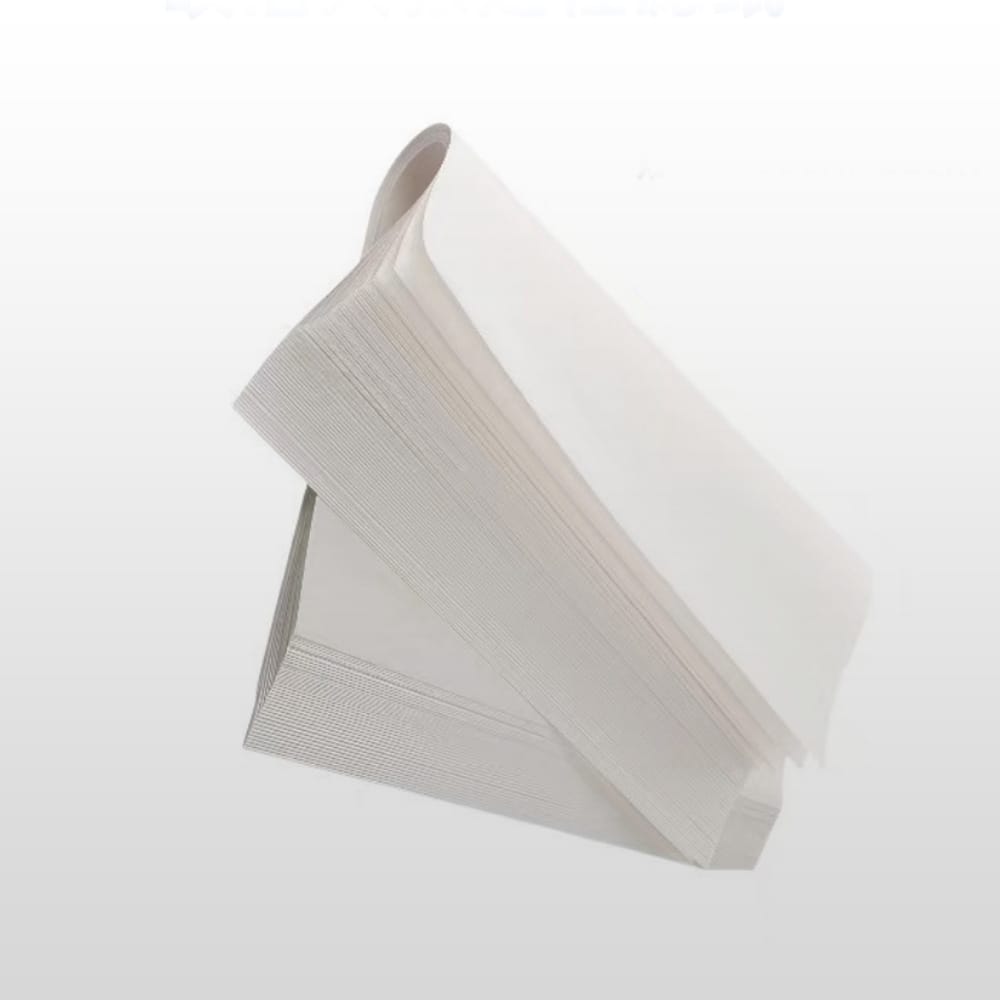
| Cleaning Material | Scratch Risk | Reusability | Best Use Case | Lint-Free |
|---|---|---|---|---|
| Microscope Lens Paper | Very Low | One-Time Use | Precision lenses, microscope objectives | Yes |
| Microfiber Cloth | Medium (if reused) | Reusable | Photography lenses | No |
| Optical Lens Wipes | Low | One-Time Use | Quick cleaning, field use | Mostly |
| Regular Tissue Paper | High | One-Time Use | Not recommended | No |
Conclusion
Microscope lens paper is an indispensable tool in laboratories and environments where precision optical instruments are used. Its lint-free structure, non-abrasive softness, and high purity make it the safest material for cleaning delicate lenses. By choosing high-quality microscope lens paper and applying correct cleaning techniques, laboratories can extend the lifespan of microscopes, maintain imaging accuracy, and reduce repair costs.
As a professional manufacturer, we remain committed to delivering premium lens cleaning tissue designed to meet the strict standards required by scientific, industrial, and educational institutions. For laboratories seeking reliable, safe, and effective cleaning materials, microscope lens paper remains the most trusted solution.
FAQ
1. What is microscope lens paper used for?
Microscope lens paper is designed for safely cleaning optical surfaces such as microscope objectives, eyepieces, condenser lenses, and other precision instruments. Its lint-free, non-abrasive texture prevents scratches and preserves the clarity of delicate coated lenses.
2. Can microscope lens paper scratch the lens?
High-quality microscope lens paper will not scratch optical surfaces. Scratches typically occur only when low-grade paper containing wood fibers or debris is used. Always choose premium lint-free lens cleaning tissue to ensure maximum safety.
3. Can I reuse microscope lens paper?
No. Microscope lens paper is meant for single use. Reusing it may lead to contamination, streaks, or accidental scratching caused by trapped dust particles.
4. Do I need to use a cleaning solution with lens paper?
You can use microscope lens paper alone for light dust removal. For fingerprints, oil, or tougher stains, pair the lens paper with a suitable lens cleaning solution, such as 70–90% ethanol or a professional optical cleaner.
5. What is the difference between microscope lens paper and regular tissue?
Regular tissues contain additives, rough fibers, and sometimes fragrances that can damage sensitive optical coatings. Microscope lens paper is chemically pure, soft, and engineered to be completely lint-free.