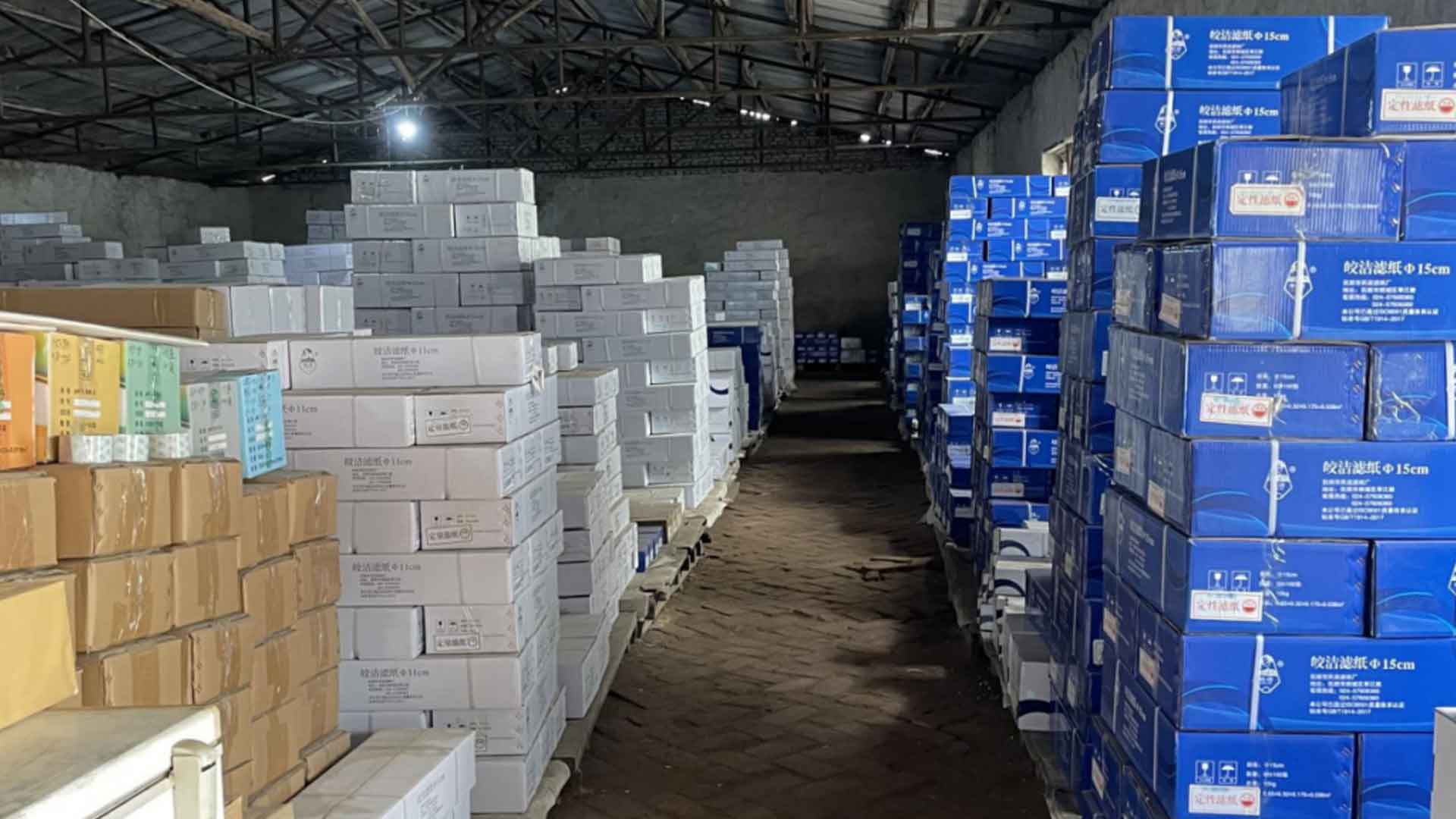
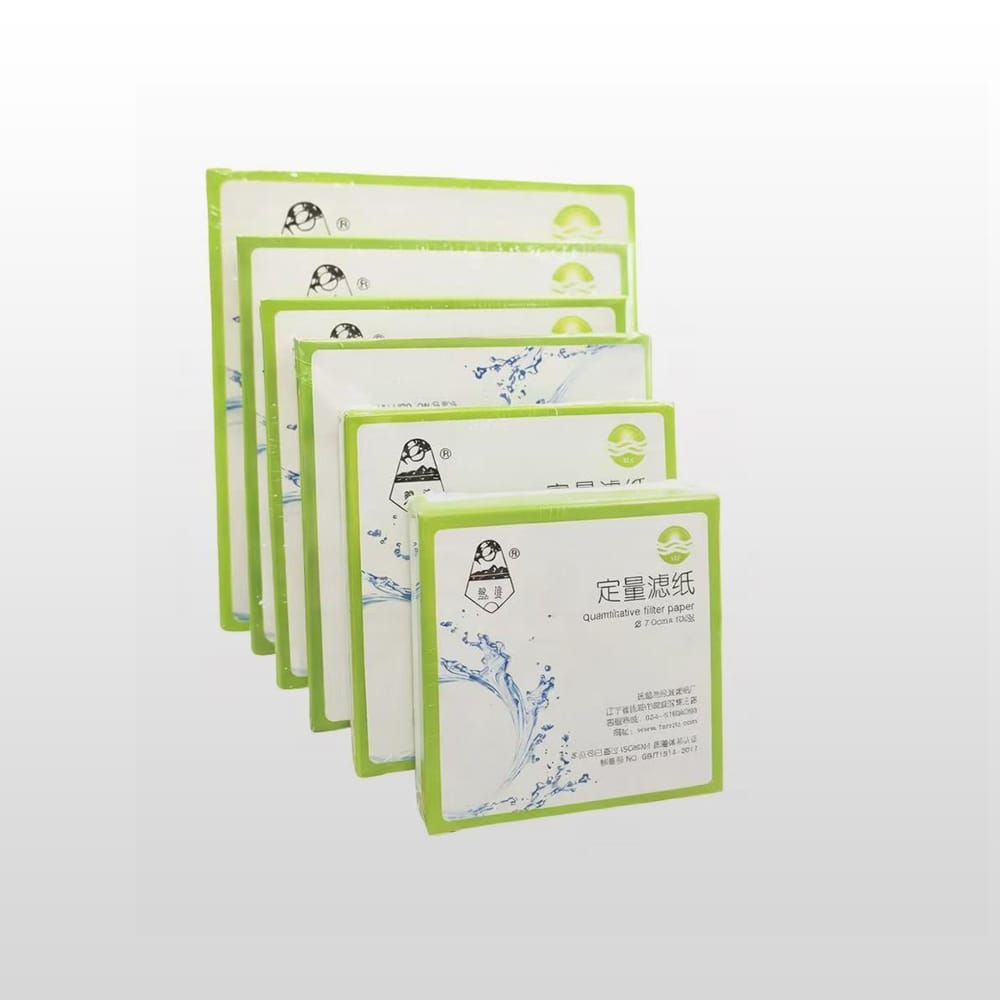
In gravimetric analysis, a result can be affected by a mass difference smaller than an ordinary paper fiber, fingerprint, moisture film, or incomplete particle transfer. The filter medium is therefore not a minor laboratory consumable. It becomes part of the measurement system.
Quantitative filter paper is designed for analytical procedures where low residual ash, controlled particle retention, clean precipitate recovery, and repeatable filtration are important. However, selecting an ashless grade alone does not guarantee an accurate result. Paper purity, filtration speed, wet strength, precipitate characteristics, washing technique, ignition conditions, storage, and batch consistency must all work together.
This guide explains how laboratories and distributors can select, test, handle, and purchase quantitative filter paper while reducing common sources of gravimetric error. Available sizes and filtration speeds can be reviewed on our quantitative analysis filter paper page.
Table of Contents
What Is Quantitative Filter Paper?
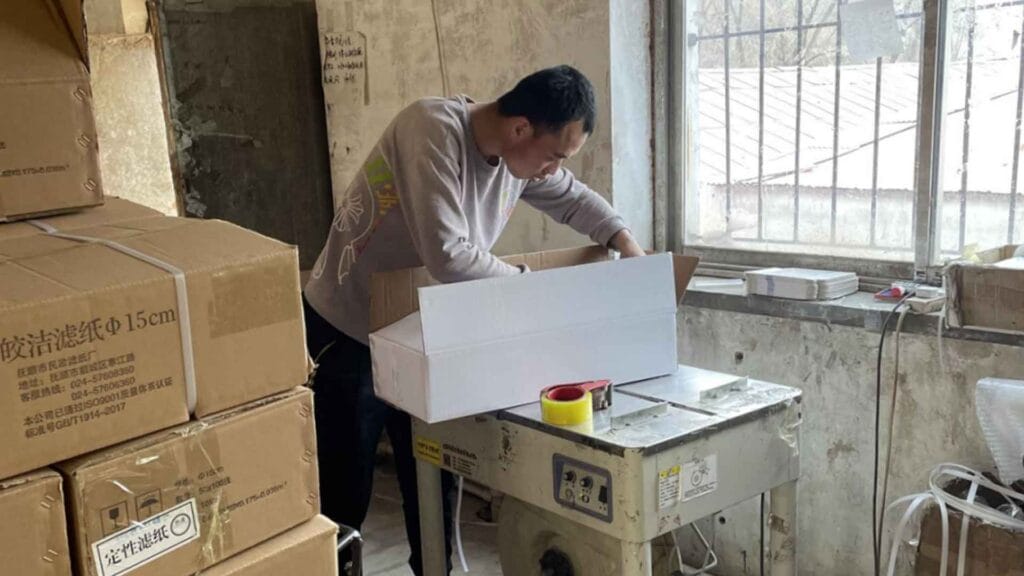
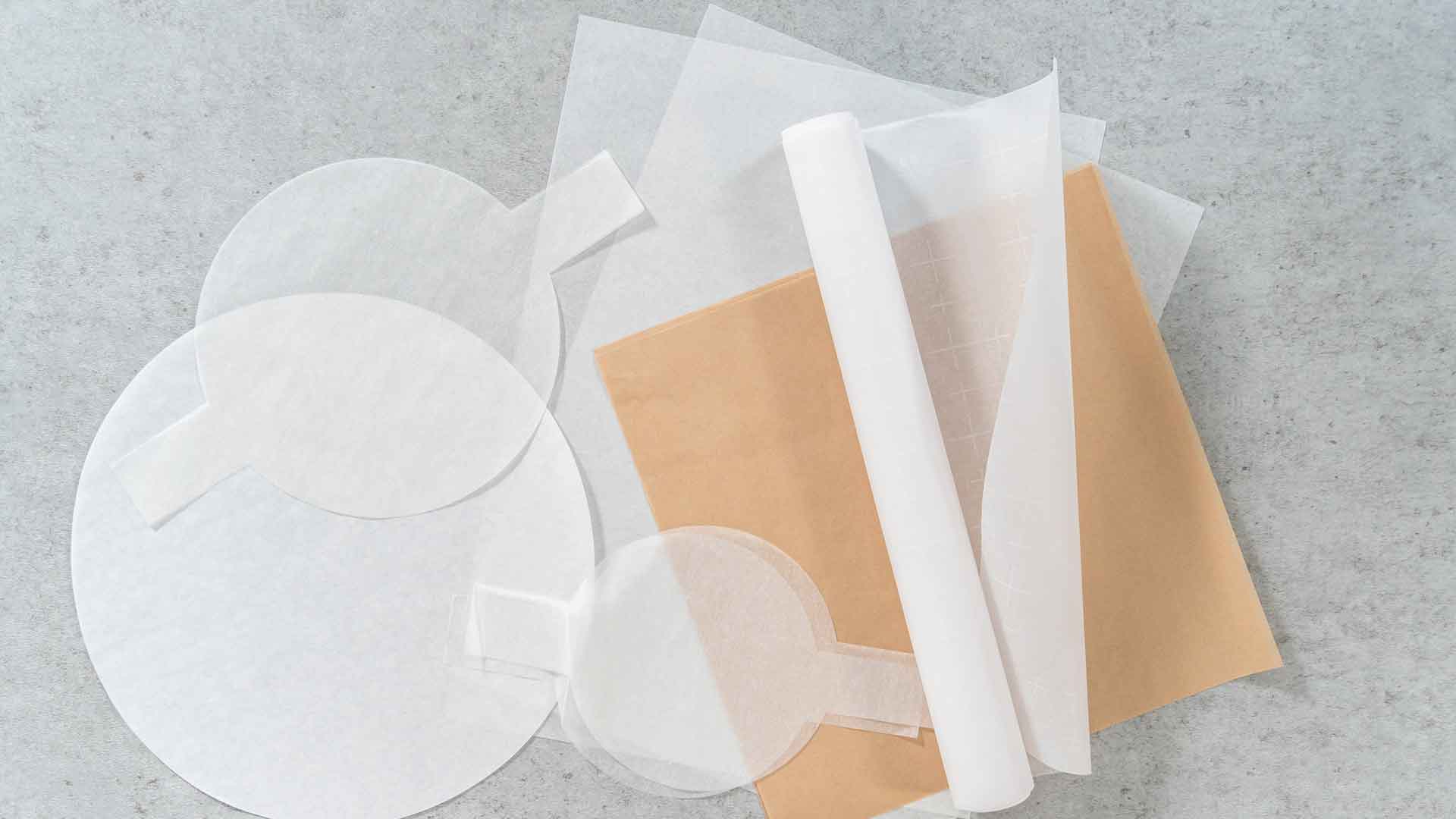
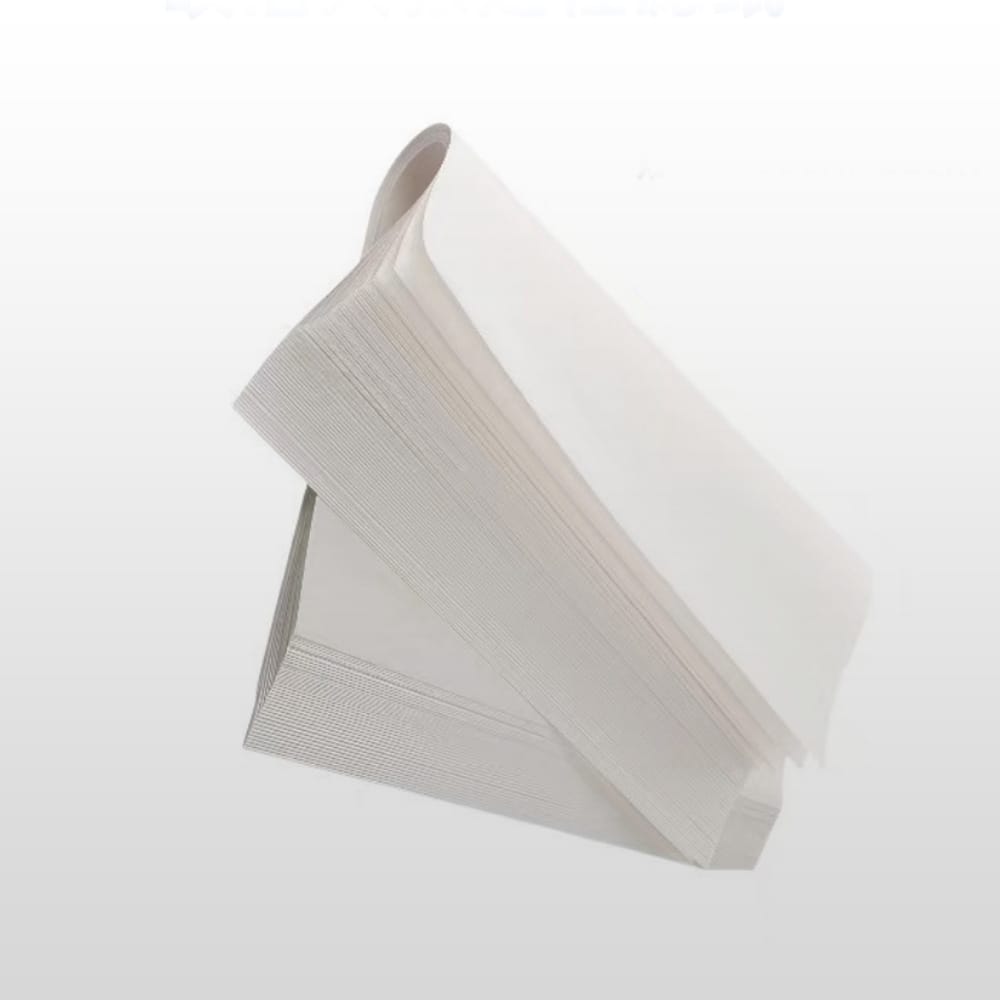
Quantitative filter paper is a high-purity cellulose filtration medium intended for analytical procedures in which collected solids may be dried, ignited, transferred, or weighed.
Compared with routine qualitative paper, it is generally manufactured to leave substantially less inorganic residue after ignition. This allows the paper and retained precipitate to be placed in a suitable crucible and heated without adding an unacceptable amount of paper-derived residue to the final mass.
The term is commonly associated with precipitation gravimetry. In this analytical approach, the target substance is converted into a compound of known composition, separated from the liquid, washed, dried or ignited, and measured by mass. A general explanation of the principle is available in this overview of gravimetric analysis.
Quantitative Does Not Mean the Paper Measures the Analyte
Quantitative filter paper does not perform the chemical measurement by itself. Its role is to support reliable separation and recovery while contributing minimal contamination or mass uncertainty.
The complete result also depends on:
- Completeness of precipitation
- Precipitate purity
- Particle size and filterability
- Transfer efficiency
- Washing effectiveness
- Drying or ignition conditions
- Cooling and weighing technique
- Calculation and stoichiometry
A suitable paper reduces one group of possible errors, but it cannot compensate for an incomplete reaction or an unsuitable analytical method.
Ashless Does Not Always Mean Zero Ash
The term “ashless” usually describes a paper engineered to leave extremely little residue after controlled ignition. It should not automatically be interpreted as literally zero remaining material.
The meaningful questions are:
- What is the maximum ash value?
- Is it stated as a percentage or mass per circle?
- Which test temperature and procedure are used?
- Is the value typical or guaranteed?
- Is it verified for each production lot?
- Is it sufficiently low for the laboratory’s expected precipitate mass?
The current ISO 1762 standard describes determining residue from paper, board, pulp, and cellulose materials after ignition at 525°C. The standard is useful for understanding and comparing paper ash, but the analytical procedure used by the laboratory may require different temperatures or conditions for the precipitate itself.
Why Filter Paper Ash Matters in Gravimetric Analysis
Gravimetric analysis relies on an accurate mass measurement. Any foreign inorganic residue remaining with the final material can create a positive bias.
If the expected precipitate is relatively large, an extremely small paper residue may be negligible. If the expected mass is small, the same residue may represent a meaningful percentage of the result.
Absolute Ash Mass vs Ash Percentage
A percentage alone can be misleading. Consider two filter circles made from the same paper:
- A small circle contains less total paper mass.
- A large circle contains more total paper mass.
- Both may have the same percentage ash.
- The larger circle can still contribute more absolute residue.
For low-mass determinations, buyers should ask for the expected or maximum ash mass per relevant filter size, not only a percentage.
Relative Error Example
Suppose the paper contributes 0.08 mg of residue.
If the final precipitate mass is 800 mg, the potential contribution is only 0.01%. If the precipitate mass is 8 mg, the same residue represents 1%.
This simplified example does not include blank correction or other sources of uncertainty, but it illustrates why quantitative filter paper must be selected relative to the method’s working range.
Paper Ash Is Not the Only Blank Source
A blank result can also include contamination from:
- Reagents
- Wash water
- Glassware
- Crucibles
- Dust
- Handling tools
- Furnace atmosphere
- Sample containers
- Laboratory air
A low-ash paper may pass its own specification while the complete method blank remains unacceptable. Laboratories should therefore evaluate the entire procedure rather than attributing every blank problem to the filter paper.
Quantitative vs Qualitative vs Hardened Filter Paper
Filter papers should be distinguished by analytical purpose and performance rather than appearance. Two white cellulose circles can have very different ash, wet strength, flow, and particle-retention characteristics.
| Paper Type | Primary Purpose | Ash Consideration | Typical Selection Priority |
|---|---|---|---|
| Qualitative filter paper | Routine clarification and general laboratory separation | Higher residue may be acceptable when the paper is not included in a mass determination | Flow, retention, size, and routine handling |
| Quantitative filter paper | Gravimetric and other precision analytical procedures | Low residual ash is essential | Ash, retention, purity, flow, and batch consistency |
| Hardened quantitative paper | Demanding filtration, washing, or recovery conditions | Low ash combined with stronger wet handling | Wet strength, chemical resistance, surface durability |
| Industrial filter paper | Large-volume process filtration | Depends on the industrial process rather than gravimetric ignition | Flow, strength, dimensions, capacity, and equipment fit |
When Qualitative Paper Is Enough
Qualitative paper is appropriate when the objective is to clarify a solution, observe a reaction, collect a sample for non-gravimetric examination, or remove suspended solids without igniting and weighing the paper.
For more information, see our qualitative filter paper for laboratory use guide.
Using quantitative filter paper for every routine filtration may provide no analytical benefit. The selection should match the actual method.
When Quantitative Filter Paper Is Necessary
A low-ash analytical paper is generally appropriate when:
- The paper will be ignited with the precipitate.
- Paper residue could influence the calculated analyte mass.
- The method specifies an ashless or quantitative grade.
- Trace contamination must be controlled.
- Accurate precipitate recovery is required.
- The laboratory needs documented lot consistency.
When a Hardened Grade May Be Useful
Some procedures involve vacuum, extensive washing, acidic or alkaline suspensions, scraping, or difficult precipitate recovery. A stronger surface and improved wet integrity may reduce tearing and fiber loss.
However, “hardened” is not a universal performance level. Buyers should confirm the treatment, ash specification, chemical compatibility, and wet-strength test behind the description.
How to Choose Fast, Medium, or Slow Filtration
Quantitative filter paper is commonly supplied in different filtration speeds. Speed should be matched to precipitate properties, not selected only to shorten the procedure.
Fast-Flow Paper
A fast grade generally has a more open structure and is suitable for relatively coarse, gelatinous, or easily retained precipitates.
Potential advantages include:
- Shorter gravity-filtration time
- Reduced delay during large-volume washing
- Lower risk of overflow with suitable precipitates
- Better throughput for routine high-volume work
The risk is insufficient retention when the precipitate contains fine particles.
Medium-Flow Paper
A medium grade provides a balance between retention and speed. It is often considered when the laboratory handles moderately fine precipitates or needs one practical grade for several validated procedures.
Its suitability still has to be confirmed through recovery, clarity, and blank testing.
Slow-Flow Paper
A slow grade usually provides finer retention but creates greater resistance to flow. It may be needed for finely divided precipitates that would pass through a more open paper.
Possible disadvantages include:
- Longer filtration time
- Faster surface clogging
- More difficult washing
- Greater operator temptation to overfill the funnel
- Increased risk of disturbing the precipitate
- Longer exposure to airborne contamination
The slowest quantitative filter paper is not automatically the most accurate. Accuracy depends on retaining the target solid without creating new handling or washing problems.
Match the Paper to the Precipitate
The nominal filtration grade cannot be selected reliably from analyte name alone. Precipitate behavior changes with reaction conditions.
Important variables include:
- Particle-size distribution
- Crystal shape
- Precipitation temperature
- Reagent concentration
- Mixing rate
- Digestion or aging time
- Solution pH
- Ionic strength
- Presence of colloids
- Solids concentration
- Required wash volume
Crystalline Precipitates
Well-formed crystals are generally easier to retain and wash than colloidal material. An excessively fine paper may unnecessarily slow the procedure.
Gelatinous Precipitates
Gelatinous solids can retain liquid, block the paper surface, and make washing difficult. A faster grade may sometimes be appropriate, but the method should control precipitate formation and digestion rather than relying on paper alone.
Fine or Colloidal Particles
Very fine particles may pass through an open structure, particularly during the early stage before a filter cake develops. A finer quantitative filter paper, improved digestion, controlled reagent addition, or another separation method may be required.
Why the First Filtrate Can Look Different
The first liquid passing through a clean paper may behave differently from later filtrate because the precipitate begins forming a secondary retention layer.
If the validated procedure permits, the initial filtrate may be refiltered. Laboratories should not introduce this step casually, because every additional transfer can create contamination or recovery loss.
The Main Error Sources in Quantitative Filtration
An analytical result can be biased high or low depending on how the filtration process is performed.
| Error Source | Likely Effect | Recommended Check |
| Paper ash or external contamination | Positive bias | Method blank and lot-specific ash data |
| Fine particles passing through | Negative bias | Filtrate clarity, recovery test, finer grade |
| Precipitate left in the vessel | Negative bias | Quantitative transfer and vessel inspection |
| Paper tearing during washing | Negative or irregular result | Wet strength, folding, support, wash pressure |
| Insufficient washing | Positive bias from soluble impurities | Wash procedure and filtrate test |
| Excessive washing | Possible dissolution and negative bias | Solubility and validated wash volume |
| Incomplete drying or ignition | Positive or unstable mass | Constant-mass protocol |
| Loss during ignition | Negative bias | Controlled charring and furnace procedure |
| Moisture uptake during cooling | Positive or unstable mass | Desiccator and consistent weighing time |
| Incorrect paper size | Bypass, overflow, or sample loss | Funnel fit and usable capacity |
Contamination From Handling
Bare fingers can transfer oils, salts, moisture, and particles. Clean forceps, suitable gloves, protected work surfaces, and closed packaging help control contamination.
The paper should be handled by an edge whenever practical. Tools must be appropriate for the target analysis because even clean-looking metal forceps can be unsuitable when trace metals are being determined.
Mechanical Loss
A torn paper, punctured cone, disturbed precipitate, or overflowing funnel can produce obvious loss. Smaller mechanical losses may remain unnoticed.
Weak wet performance should be investigated separately from ash content. Our wet strength filter paper guide explains the relationship between liquid exposure, support, loading, and paper failure.
Moisture and Environmental Effects
Cellulose is hygroscopic and can exchange moisture with the surrounding atmosphere. Although quantitative filter paper is not normally weighed as the final analyte, moisture can affect paper handling, storage stability, and incoming mass comparisons.
Consistent conditioning is especially important when comparing basis weight or conducting supplier qualification. The ISO 187 standard atmosphere provides a recognized framework for conditioning paper before physical testing.
A Reliable Gravimetric Filtration Workflow
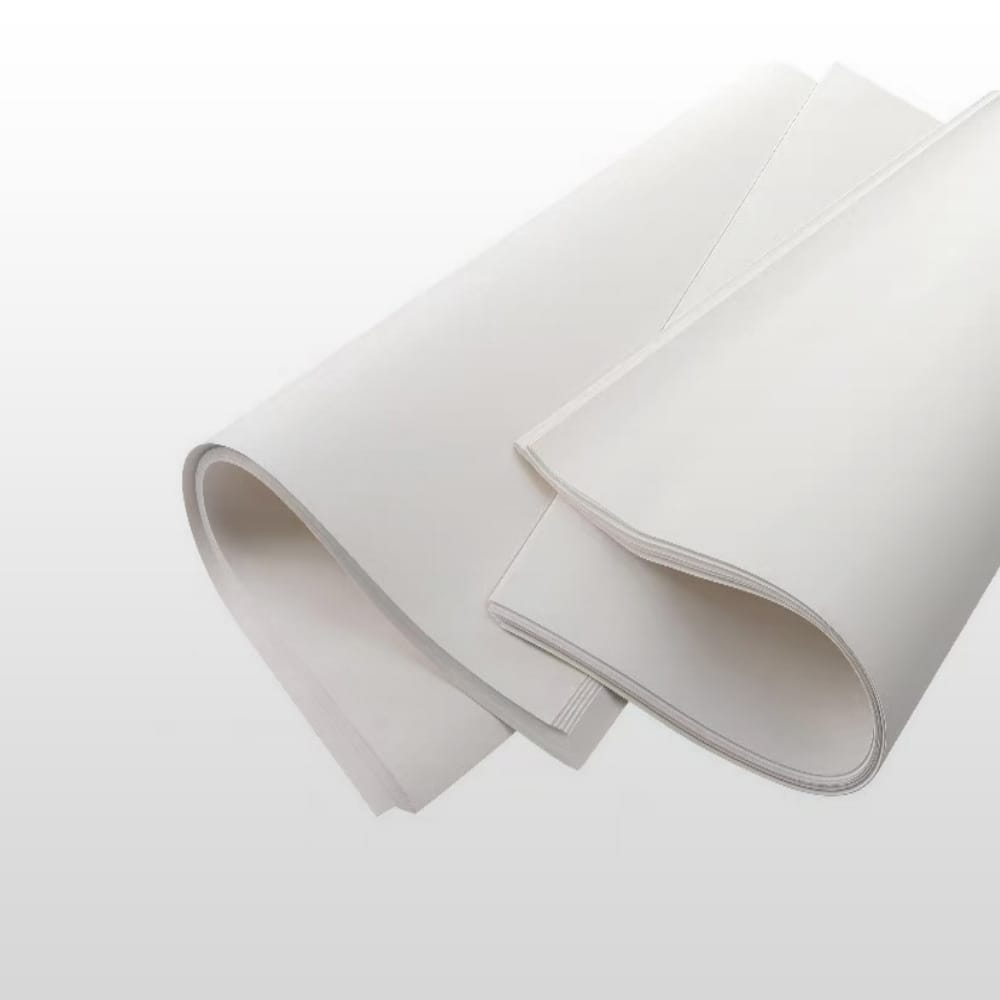
The exact analytical method must always be followed. The workflow below identifies general control points rather than replacing a validated standard operating procedure.
Step 1: Review the Method Requirements
Before selecting quantitative filter paper, identify:
- Required paper type
- Filtration speed or retention
- Paper diameter
- Gravity or vacuum filtration
- Expected precipitate mass
- Washing solution
- Drying or ignition temperature
- Required balance readability
- Blank and recovery criteria
- Applicable safety requirements
If the method specifies a particular performance grade, substituting another paper requires formal verification.
Step 2: Select the Correct Diameter
The paper should fit the funnel without extending above its rim or sitting too low. An incorrect diameter can reduce usable area, create channels, or cause liquid to bypass the paper.
For a conical fold, the paper edge should form an even seal against the funnel after wetting. Buyers should verify actual diameter and cutting tolerance rather than relying only on the package label.
Step 3: Fold Without Damaging the Paper
Make clean folds without repeatedly creasing or rubbing the same area. Excessive pressure can weaken the paper at the cone tip.
The fold should open into a stable cone that sits evenly in the funnel. A damaged apex can fail after the precipitate accumulates.
Step 4: Seat the Paper Correctly
Wet the paper with an appropriate liquid and position it against the funnel wall. The liquid used for seating must be compatible with the analytical procedure.
Air gaps and wrinkles can reduce the effective filtration area or allow bypass.
Step 5: Transfer the Precipitate Quantitatively
Pour the supernatant carefully before transferring the main precipitate when the validated method permits. Use a suitable wash liquid and transfer aid to move particles from the vessel.
Inspect the vessel, stirring rod, pouring lip, and funnel wall for retained solids.
Quantitative transfer means that the recovery of analyte is controlled and demonstrated—not merely that most visible material was moved.
Step 6: Control the Liquid Level
Avoid filling above the paper edge. Liquid that rises between the paper and funnel can bypass the filtration medium and carry particles into the filtrate.
Overfilling can also float or disturb the precipitate cake.
Step 7: Wash According to the Method
Washing removes soluble impurities and excess reagents from the collected precipitate. Use the specified wash liquid, volume, temperature, and sequence.
Several controlled small washes may be more effective than one uncontrolled large addition, but the method and precipitate solubility must determine the procedure.
Step 8: Inspect the Filtrate and Paper
Check for:
- Visible turbidity
- Particles in the filtrate
- Edge bypass
- Tears or pinholes
- Abnormal flow
- Fibers downstream
- Precipitate trapped above the intended area
A clear-looking filtrate does not prove complete retention, but visible particles indicate that the result needs investigation.
Step 9: Dry, Char, or Ignite Safely
If the paper and precipitate will be ignited, follow the validated sequence. Rapid heating can cause smoking, flaming, spattering, or mechanical loss.
The paper may need controlled drying and charring before final furnace treatment. The correct process depends on the precipitate and method.
Step 10: Cool and Weigh Consistently
After heating, the crucible and residue should be cooled under controlled conditions and weighed according to the method.
High-accuracy gravimetric work depends on consistent conditioning, calibrated balances, contamination control, and repeat measurements. An EPA gravimetric analysis procedure illustrates how detailed filter conditioning, handling, pre-weighing, post-weighing, and quality-control procedures can be in a regulated measurement system.
The EPA procedure concerns particulate-monitoring filters rather than cellulose precipitation paper, but its broader lesson is relevant: environmental control and documented handling are part of a gravimetric result.
How to Verify Ash and Blank Performance
Supplier data should be supported by laboratory verification appropriate to the application.
Paper Ash Test
An ash test evaluates the inorganic residue remaining after the paper is ignited under specified conditions.
The report should identify:
- Test method
- Ignition temperature
- Heating duration
- Sample mass or filter size
- Number of replicates
- Crucible preparation
- Conditioning procedure
- Calculation basis
- Typical result and acceptance limit
Results measured under different temperatures should not be treated as directly interchangeable without technical review.
Method Blank
A method blank passes through the complete analytical procedure without the target sample. It can reveal contamination introduced by reagents, paper, equipment, handling, washing, heating, and weighing.
If the blank is high, test its possible sources individually rather than immediately rejecting the quantitative filter paper.
Recovery Study
A recovery study uses a known amount of target material or a suitable reference to determine whether the procedure retains and measures the expected mass.
Poor recovery may indicate:
- Incomplete precipitation
- Particle breakthrough
- Transfer loss
- Dissolution during washing
- Ignition loss
- Calculation error
Duplicate Testing
Duplicates help identify procedural variability. If duplicate results disagree, inspect differences in filtration time, transfer, washing, paper condition, ignition, cooling, and balance stability.
How to Compare Quantitative Filter Paper Samples
A supplier comparison should control the process conditions so that material differences can be separated from operator and method variation.
Create a Sample Evaluation Plan
Test each candidate using the same:
- Paper diameter
- Sample volume
- Precipitate preparation
- Liquid temperature
- Solids loading
- Funnel type
- Wash procedure
- Drying or ignition sequence
- Balance
- Environmental conditions
- Operator instructions
Record More Than Filtration Time
| Evaluation Item | Why It Matters |
| Ash per paper or ash percentage | Estimates paper-derived residue |
| Particle recovery | Confirms that the target solid is retained |
| Filtration time | Indicates practical throughput |
| Wash time | Shows whether the cake can be cleaned efficiently |
| Wet integrity | Reveals tearing and handling risk |
| Surface release | Affects precipitate transfer or scraping |
| Diameter tolerance | Influences funnel fit and bypass |
| Visual formation | Helps identify thin spots and nonuniform areas |
| Blank result | Captures contamination from the full procedure |
| Duplicate variation | Shows repeatability |
| Lot-to-lot consistency | Supports long-term laboratory control |
Repeat the Leading Candidate
One successful circle does not demonstrate consistent performance. Test multiple filters from the same package and, where analytical risk is high, from different production lots.
The preferred quantitative filter paper should deliver a stable result window, not one unusually favorable trial.
What to Check on a Technical Data Sheet
A useful technical data sheet should identify both material properties and the methods used to obtain them.
Purity and Analytical Properties
Request:
- Fiber composition
- Ash content
- Ash test method and temperature
- Maximum ash per relevant filter size, where available
- Extractable or trace-element information when required
- pH or chemical characteristics relevant to the method
- Lot identification
Filtration Properties
Request:
- Filtration speed
- Test liquid and test method
- Particle-retention value
- Retention test method
- Thickness
- Basis weight
- Wet strength or handling classification
The relationship between grammage, thickness, and filtration cannot be assumed. Our filter paper GSM guide explains why equal-weight papers can have different pore structures and flow behavior.
Physical and Supply Properties
Request:
- Available diameters
- Diameter tolerance
- Edge quality
- Number of circles per package
- Packaging material
- Storage conditions
- Shelf-life statement, when applicable
- Batch traceability
- Certificate availability
- Change-notification policy
Incoming Quality Control for Bulk Orders
Laboratories, distributors, and industrial testing organizations should establish an inspection plan based on the risk of the application.
Packaging Inspection
Check whether packages are:
- Sealed and undamaged
- Dry and clean
- Clearly labeled
- Traceable to a production lot
- Protected from dust and chemical vapors
- Consistent with the ordered grade and diameter
Dimensional Check
Measure representative circles from different packages. Diameter variation can affect folding, funnel fit, usable volume, and bypass risk.
Visual Inspection
Use reflected or transmitted light to look for:
- Holes
- Thin areas
- Fiber clusters
- Stains
- Embedded particles
- Uneven edges
- Creases
- Surface contamination
Visual consistency does not prove analytical performance, but visible defects can justify additional investigation.
Performance Confirmation
Depending on method risk, incoming testing may include:
- Ash verification
- Method blank
- Filtration-time comparison
- Standard recovery
- Wet handling
- Duplicate precision
- Reference-lot comparison
Do not change several laboratory variables at the same time as a new paper lot. Otherwise, the cause of a shifted result may be difficult to identify.
Troubleshooting Common Problems
Filtration Is Too Slow
Possible causes include:
- Paper retention is finer than necessary.
- The precipitate is too fine or gelatinous.
- Solids loading is too high.
- The paper is folded or seated incorrectly.
- The liquid is unusually cold or viscous.
- The precipitate was not adequately digested.
- The filter area is too small.
Do not immediately substitute a faster quantitative filter paper. First confirm that the analytical recovery will remain acceptable.
Fine Particles Appear in the Filtrate
Check:
- Paper grade
- Punctures or tears
- Liquid level
- Edge bypass
- Particle formation
- Funnel fit
- Pouring technique
A finer grade may help, but changing precipitation conditions may be the more effective solution.
The Paper Tears During Washing
Possible causes include poor wet strength, a damaged fold, excessive wash pressure, heavy precipitate load, rough handling, or unsuitable chemical exposure.
Evaluate whether a stronger quantitative filter paper is compatible with the required ash and retention performance.
Blank Results Are Too High
Investigate:
- Paper ash
- Reagent purity
- Wash water
- Crucible cleanliness
- Handling tools
- Dust exposure
- Furnace contamination
- Balance-area cleanliness
- Packaging contamination
Run component blanks to isolate the source.
Replicate Results Do Not Agree
Inconsistent results can arise from variable precipitation, transfer, washing, drying, ignition, cooling, or weighing.
Paper variation should be evaluated, but it should not be assumed to be the only cause.
What to Include in a Supplier RFQ
A technical request should contain enough information for the supplier to recommend and document a suitable grade.
Include:
- Intended analytical method
- Target analyte or precipitate
- Expected particle characteristics
- Expected precipitate mass
- Required ash limit
- Preferred filtration speed
- Required retention
- Gravity or vacuum operation
- Chemical exposure
- Paper diameter
- Packaging quantity
- Required certificates
- Lot-traceability requirements
- Incoming inspection plan
- Estimated order volume
- Sample-testing requirements
If a current paper performs well, provide its non-confidential specifications and describe what must remain equivalent. If the current paper causes a problem, identify whether the issue is ash, flow, retention, tearing, dimensions, packaging, or batch variation.
For sample matching and bulk-supply discussion, send the method requirements through our contact page.
FAQ
What is quantitative filter paper used for?
Quantitative filter paper is primarily used in analytical procedures where low paper residue and accurate solid recovery are important, especially precipitation gravimetry and related laboratory testing.
Is quantitative filter paper completely ash-free?
Not necessarily. “Ashless” generally means that the paper leaves an extremely low amount of residue after controlled ignition. Buyers should check the stated maximum, test method, temperature, and absolute ash mass.
What is the difference between quantitative and qualitative filter paper?
Qualitative paper is intended mainly for routine filtration and general analysis. Quantitative filter paper is manufactured for low residual ash and more demanding analytical work where paper residue could influence a mass result.
Which filtration speed should I choose?
Choose according to the precipitate. Fast grades are generally suited to coarser or easily retained solids, medium grades balance speed and retention, and slow grades are used when finer particles must be captured. The method and recovery test should confirm the choice.
Does slow filter paper always provide more accurate results?
No. A slow grade may retain finer particles, but it can also clog, delay washing, and increase handling risk. The most accurate grade is the one that meets the required recovery, blank, and precision criteria.
Can quantitative filter paper be used under vacuum?
Some grades may be suitable, especially those with stronger wet performance. However, the paper, support, pressure differential, chemical exposure, and validated method must all be checked before vacuum use.
Why does my quantitative filter paper tear when wet?
Possible reasons include insufficient wet strength, excessive loading, a damaged fold, unsupported areas, aggressive washing, vacuum stress, or chemical incompatibility.
How should quantitative filter paper be stored?
Keep it sealed in clean, dry packaging away from dust, moisture, direct sunlight, chemical fumes, and areas with rapid temperature or humidity changes. Maintain lot identification after opening.
Can paper GSM determine ash content?
No. GSM measures mass per unit area. It does not directly determine purity or residual ash. Two papers with the same GSM may have different fibers, treatments, inorganic content, flow, and retention.
How should a new production lot be approved?
Compare the new lot with an accepted reference using relevant tests such as visual inspection, dimensions, filtration time, method blank, recovery, wet integrity, and duplicate precision.
What information is needed for a custom recommendation?
Provide the analytical method, precipitate, expected mass, required ash limit, retention, filtration speed, chemical conditions, diameter, packaging, quality documents, and current performance issue.
Conclusion
Quantitative filter paper supports reliable gravimetric analysis by combining low residual ash with controlled retention, filtration speed, purity, dimensions, and handling performance. Nevertheless, the lowest ash number or slowest filtration grade is not automatically the best selection.
The paper must match the precipitate, analytical method, expected mass, washing procedure, ignition conditions, and allowable measurement uncertainty. Laboratories should also control transfer, contamination, moisture, paper fit, drying, cooling, and weighing because these factors can produce errors larger than the paper ash itself.
For procurement, compare technical data using clearly identified test methods, verify representative samples, and establish a practical incoming quality-control plan. Consistent quantitative filter paper should reduce uncertainty across repeated tests and production lots—not simply meet one headline specification.
Explore our complete filter paper product range or contact us with your method, required diameter, filtration speed, ash requirement, and sample-testing plan.