Table of Contents
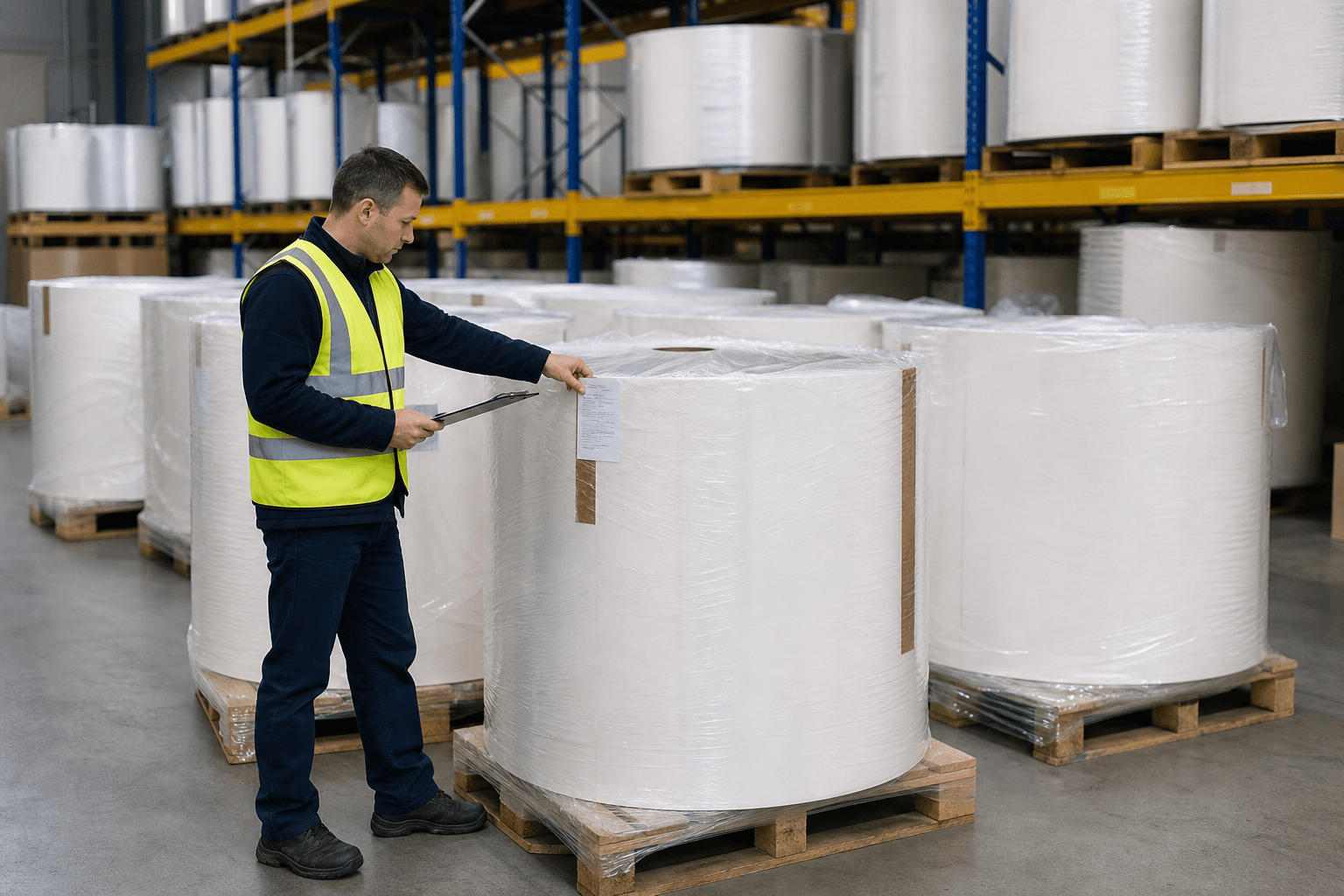
A date on a warehouse label can make filter paper shelf life look simple. In practice, a roll does not become unsuitable at midnight on an arbitrary anniversary. Its usable condition depends on the original construction, packaging integrity, storage history, handling damage, and the demands of the filtration system in which it will run.
That distinction matters to purchasing and quality teams. Discarding sound inventory creates avoidable waste, while releasing a damaged roll can cause web breaks, uneven feeding, bypass, or inconsistent filtrate. A reliable filter paper shelf life program therefore combines supplier information with traceable warehouse controls, a documented inspection, and an application trial when evidence is uncertain.
This guide provides a practical decision process for unopened and previously opened industrial filter paper rolls. It is intended for procurement, warehouse, quality, maintenance, and production teams that need an auditable answer to one question: can this specific roll still be used safely and consistently in this specific process?
Does Industrial Filter Paper Have a Fixed Expiration Date?
Industrial filter paper is not a perishable product in the same sense as food or a reactive chemical. However, that does not mean filter paper shelf life is unlimited. Cellulosic and synthetic fiber structures can be affected by moisture cycling, contaminants, heat, ultraviolet exposure, compression, and poor handling. Packaging, cores, adhesives, treatments, and converted edges may also age differently from the base sheet.
A supplier’s recommended storage period should be treated as a review point under stated conditions, not as permission to ignore the roll until that date. Ask what the recommendation assumes: unopened packaging, indoor storage, protection from direct sunlight, stable humidity, original pallet orientation, or another condition. If the actual history is unknown, the printed date alone cannot establish filter paper shelf life.
The operating risk also changes the filter paper shelf life decision. A roll used on a well-supported gravity bed has different mechanical demands from paper pulled through narrow guides or exposed to vacuum or pressure. Define fitness for use against the machine and liquid, not only against calendar age.
What Actually Shortens Filter Paper Shelf Life
The most common threats to filter paper shelf life are environmental fluctuation and physical damage. Paper can exchange moisture with surrounding air. Repeated changes may alter flatness, stiffness, dimensional stability, and handling even when no obvious water stain is present. Condensation is especially concerning in a filter paper shelf life review because it can occur inside protective wrapping after a cold roll is moved into a warm, humid area.
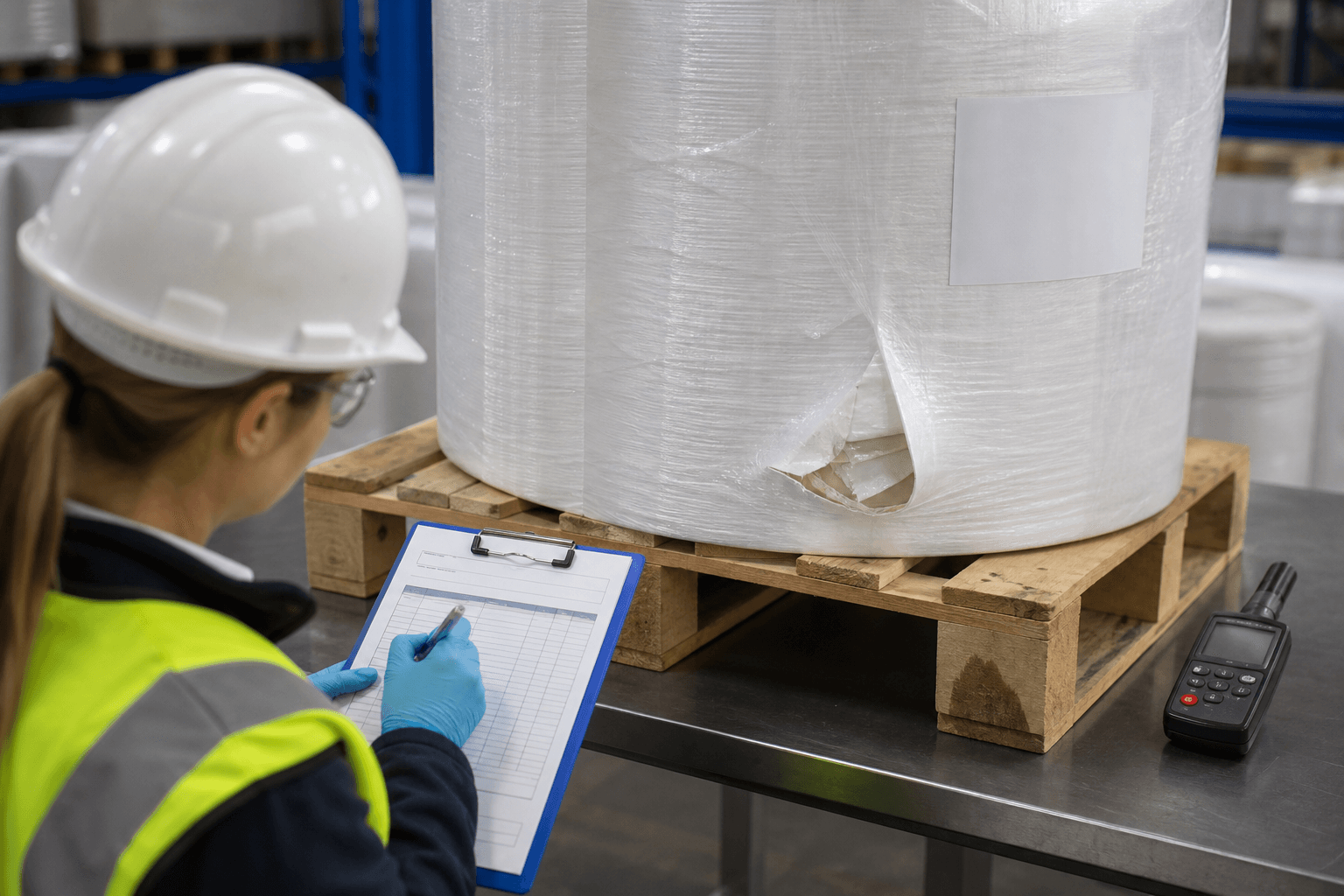
- Water or high humidity: may cause waviness, blocking between layers, odor, staining, or biological contamination.
- Excessive dryness or heat: may make some papers less flexible and can affect packaging or treatments.
- Dust, oil mist, and chemicals: can contaminate the clean media before it reaches the machine.
- Crushed edges or core distortion: can prevent smooth unwinding even when the sheet itself remains acceptable.
- Direct sunlight: heats the roll unevenly and can degrade exposed packaging or material.
- Stacking and point loads: can create flat spots, telescoping, or local compression.
For this reason, warehouse age should never be the only filter paper shelf life record. A more useful history identifies where the roll was stored, whether the wrapping was opened, whether it was returned from production, and whether any abnormal exposure occurred.
Build a Receiving Baseline Before Storage
You cannot assess filter paper shelf life reliably without knowing the starting condition. At receiving, confirm the purchase order, media grade, width, core dimensions, roll identification, quantity, and packaging condition. Photograph any crushed edge, wet carton, puncture, loose wrap, shifted pallet, or mismatched label before moving the material.
Record the supplier lot and receipt date in a form that remains attached to the inventory record. If the specification includes basis weight, permeability, thickness, tensile properties, or another acceptance test, retain the certificate and sampling result with the lot. These records turn a later filter paper shelf life review into a comparison instead of a guess.
Do not unwrap every roll simply to inspect it. Opening intact moisture-resistant packaging can remove part of the protection you are trying to verify. Use a risk-based receiving plan: examine the shipment exterior, sample according to the quality plan, and preserve unopened units where possible. The site’s filter paper storage guide explains how handling choices made on arrival influence filter paper shelf life.
Set Storage Controls Around the Roll, Not Just the Room
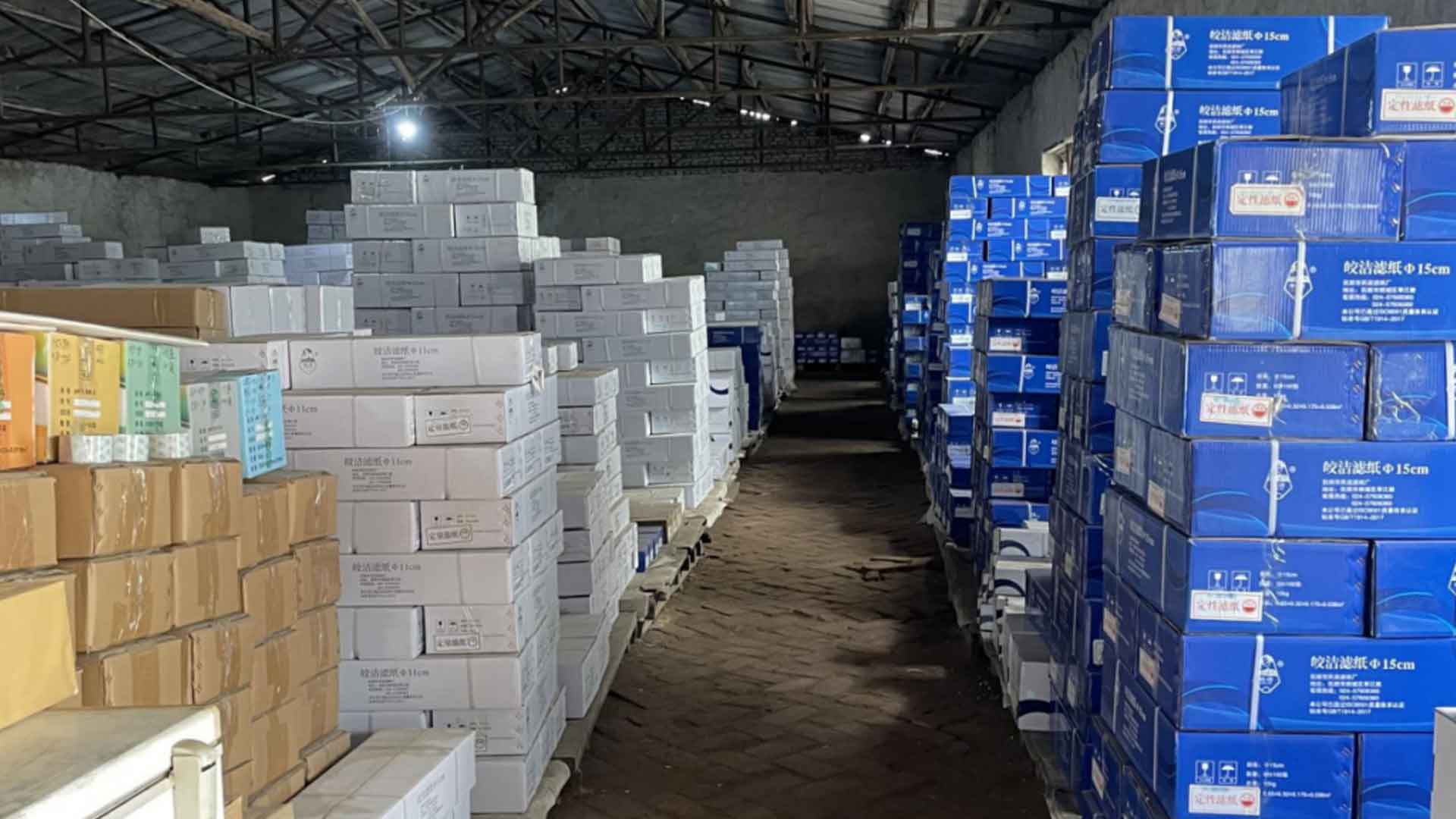
A warehouse temperature reading is useful, but it does not describe every roll’s microenvironment. Stock near an exterior door, roof leak, steam line, heater, window, or frequently washed floor can experience conditions that differ from the center of the room. Protect filter paper shelf life by mapping these local risks and defining approved storage locations.
- Keep rolls in their original protective packaging until needed.
- Store them indoors, off the floor, away from water, direct sunlight, dust, and chemical vapors.
- Support rolls in the orientation and stacking arrangement agreed with the supplier; prevent concentrated loads on edges and cores.
- Identify opened rolls clearly and close the protective wrap after partial use.
- Allow a cold roll to acclimate while still wrapped before opening it in a warmer area.
- Log excursions, leaks, moves, and returns from production instead of relying on memory.
The goal is not to claim that one universal temperature or humidity guarantees filter paper shelf life. A credible filter paper shelf life program keeps the environment stable, dry, clean, and documented, then follows the storage limits supplied for the selected media.
Use FEFO Rotation Without Disrupting Traceability
First-expired, first-out (FEFO) is more useful than simple first-in, first-out when different lots have different supplier review dates or storage histories. It prioritizes the inventory that needs attention first while keeping lot identity visible. FEFO does not mean automatically issuing a questionable roll; it means inspect or use the eligible older stock before newer stock.
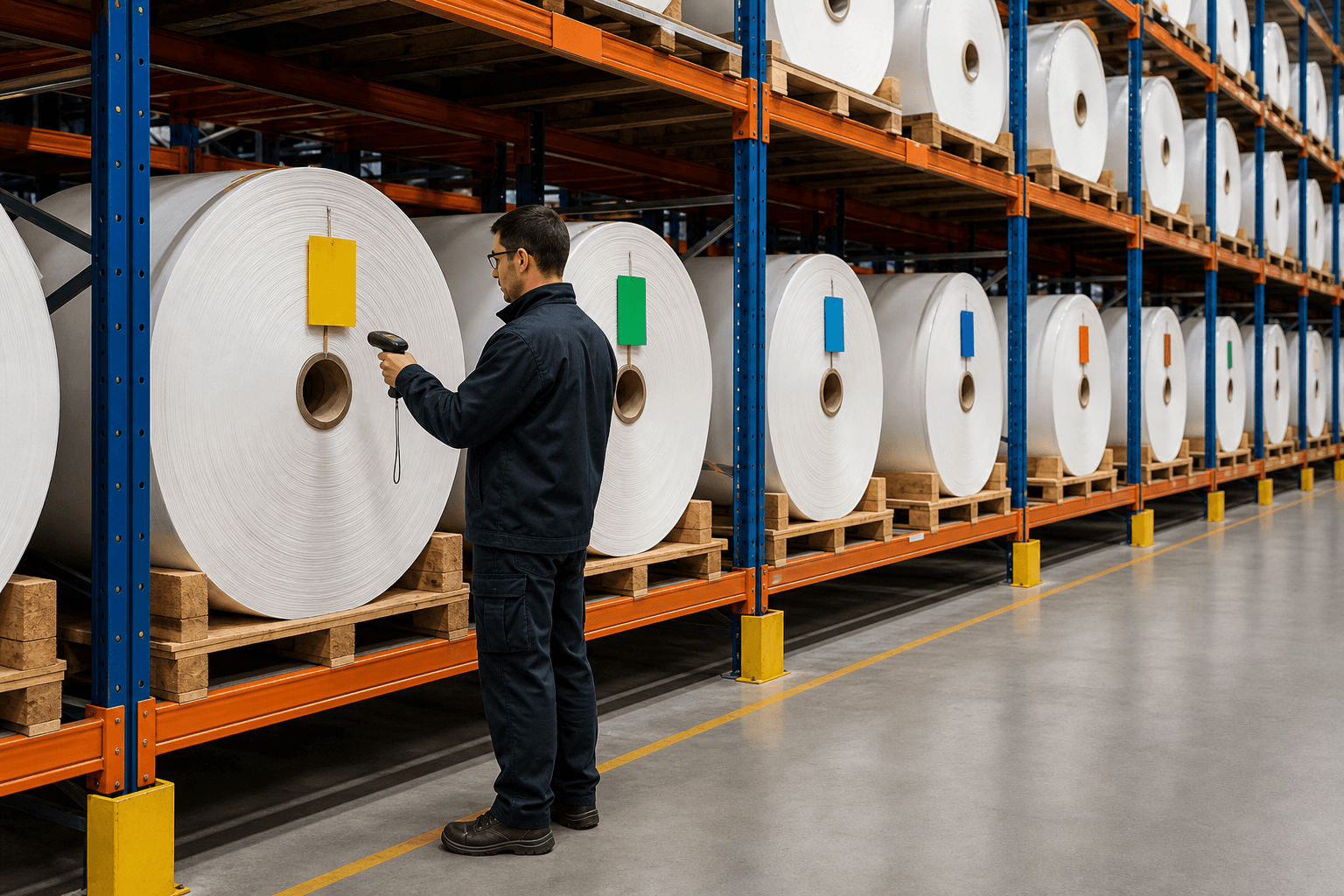
Assign every unit a location and status such as released, inspection due, on hold, opened, returned, or rejected. Avoid relabeling that hides the original lot. When a partial roll returns to storage, record the date opened, approximate remaining length or weight, exposure during use, and why it was removed. Opened-roll history is essential because its filter paper shelf life can no longer be evaluated from the supplier’s unopened-package guidance alone.
A monthly filter paper shelf life exception report is often more useful than a full inventory printout. It can highlight rolls approaching their review date, units with missing records, damaged packaging, and slow-moving custom dimensions. Procurement can then reduce future over-ordering or discuss smaller releases for unusual sizes.
Inspect an Aged Roll Before Releasing It
When a roll reaches its filter paper shelf life review date, quarantine it long enough to complete a documented check. Begin with records: identity, age, packaging status, storage location, environmental excursions, previous opening, and any supplier-specific limit. Then inspect the roll in a clean, well-lit area without creating new damage.
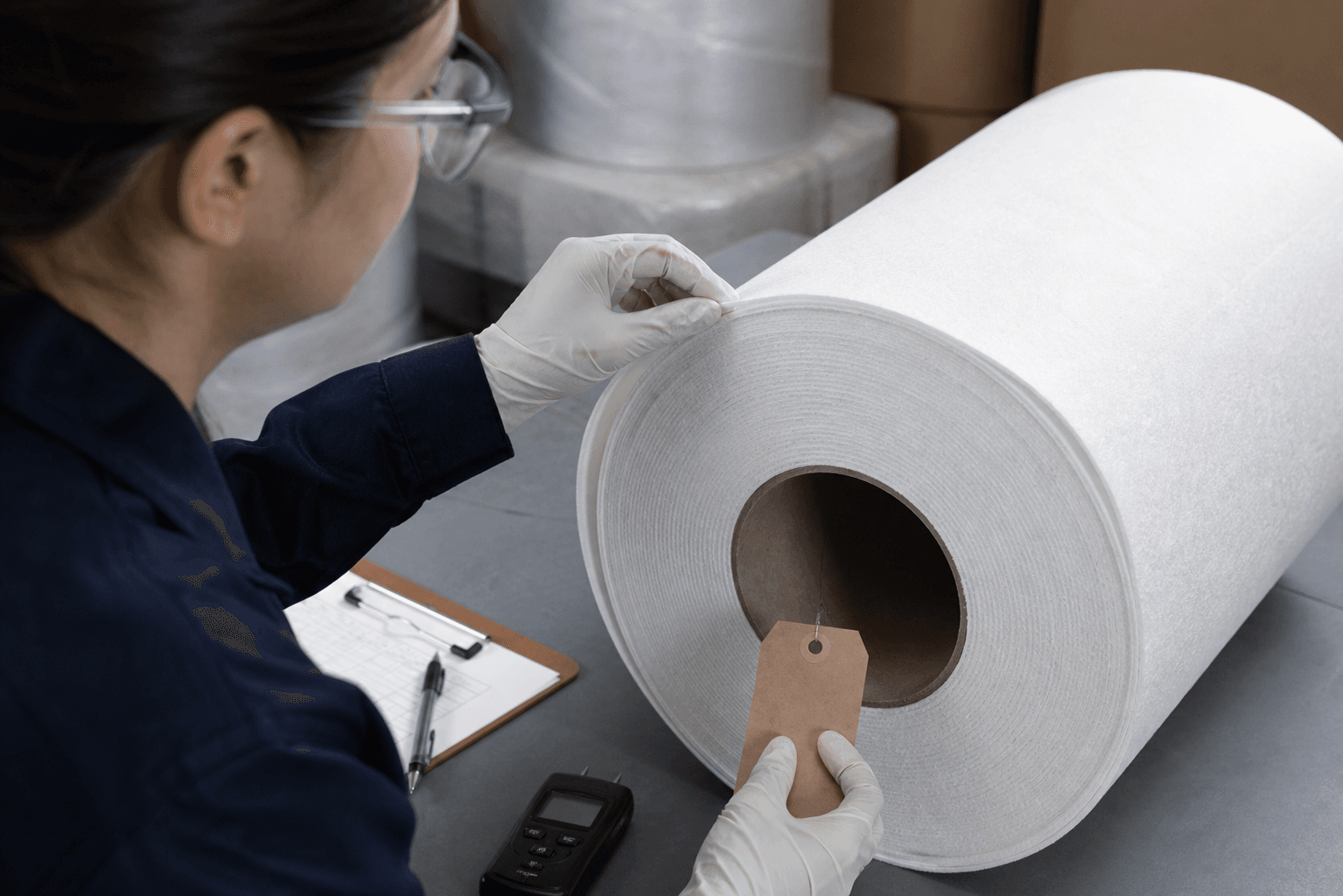
- Confirm the label is legible and matches the required grade and dimensions.
- Look for water marks, mold-like growth, unusual odor, discoloration, embedded debris, or chemical contamination.
- Check the core for crushing, moisture damage, looseness, or loss of roundness.
- Examine roll edges for impact damage, waves, telescoping, delamination, and uneven winding.
- Unwind a controlled outer length and check for blocking, brittleness, cracks, wrinkles, splices, or surface transfer.
- Compare representative measurements with the approved specification using the same conditioning and method where practical.
A visual filter paper shelf life check alone cannot prove filtration performance, but it can identify conditions that make further testing inappropriate. Any suspected biological or chemical contamination should be handled under the facility’s safety and quality procedures. Do not smell material closely or handle unknown contamination without suitable controls.
Choose Release, Trial, Hold, or Reject
The filter paper shelf life decision should lead to a clear disposition. Avoid vague notes such as “looks old but probably usable.” The following table separates evidence from action; site-specific safety, quality, environmental, and equipment requirements still apply.
| Observed condition | Recommended status | Next action |
|---|---|---|
| Intact packaging, complete traceability, acceptable inspection, storage history within supplier guidance | Release | Issue under normal controls and retain the inspection record |
| Review date passed, but identity and storage history are complete and no damage is found | Controlled trial | Compare with approved stock under stable machine conditions before general release |
| Missing records, damaged wrap, uncertain exposure, or measurement requiring investigation | Hold | Segregate the roll and request quality or supplier review |
| Water damage, contamination, mold-like growth, severe core or edge damage, or failed acceptance test | Reject | Prevent use and follow the site’s disposal and supplier-claim procedure |
Document who made the filter paper shelf life decision, the evidence reviewed, any restricted application, and the next review date. If a roll is released only for a low-risk trial, the inventory status must prevent it from being installed elsewhere without that restriction.
Validate Borderline Stock in a Controlled Trial
A controlled trial is the most defensible way to evaluate filter paper shelf life when the roll appears sound but its age exceeds routine guidance. Choose an application where the consequences of a web break or filtration change can be managed. Confirm machine guarding and energy-control procedures before installation, and never bypass an interlock to observe the paper.
Compare the aged roll with an approved reference grade. Keep width, support condition, liquid, production mix, and machine settings as stable as practical. Record loading, tracking, wrinkles, tears, advancement frequency, liquid level or differential pressure, visible bypass, filtrate appearance, cake release, and operator handling. The filter paper roll installation checklist helps remove setup errors from the comparison, while the filter paper permeability guide explains why flow behavior should not be judged from thickness alone.
Stop the trial if the sheet becomes unsafe to handle, damages equipment, or causes unacceptable process performance. A successful short run supports a defined release under the tested conditions; it does not automatically extend filter paper shelf life for every roll, lot, or application.
Write a Shelf-Life Procedure Procurement Can Use
A practical filter paper shelf life procedure should name the roles responsible for receiving, storage, rotation, inspection, disposition, and supplier communication. Include the required records, status labels, inspection triggers, sampling rules, approved test methods, escalation criteria, and treatment of opened or returned rolls. Keep the wording specific enough that two trained employees would reach the same filter paper shelf life decision from the same evidence.
Reference primary guidance where it supports the procedure. ISO 187 describes standard atmospheric conditioning and testing concepts for paper and board. The Library of Congress guidance on the care of paper explains how heat, moisture, light, and pollutants contribute to deterioration. The U.S. National Archives storage guidance provides additional preservation context. Machinery work should also remain consistent with the facility’s energy-control program and applicable requirements such as OSHA’s control of hazardous energy standard.
These sources do not establish a universal expiration date for industrial filtration media. Use them to strengthen filter paper shelf life discipline, then rely on the media specification, supplier information, actual roll history, and application evidence for the final decision.
Frequently Asked Questions
Can filter paper be used after the supplier’s recommended storage period?
Possibly, but a filter paper shelf life release should be based on traceable storage history, inspection, relevant measurements, and a controlled trial where risk warrants it. Passing a date does not prove failure, and appearance alone does not prove performance.
Does unopened packaging guarantee filter paper shelf life?
No. Intact packaging reduces exposure, but the roll may still have experienced heat, condensation, impact, compression, or improper stacking. Inspect the package and verify the storage record before release.
Should opened rolls have a shorter review interval?
Opened rolls need a separate filter paper shelf life review because the original protective condition has changed. Record the opening date, reseal the wrap, protect the edges, and define the interval according to local environment, media construction, and supplier guidance.
Which test is most important for an aged roll?
There is no single universal filter paper shelf life test. Select measurements linked to the risk: dimensions and core condition for machine fit, tensile or wet handling for break risk, and permeability or application performance for flow. Use documented methods and an approved reference.
How can buyers reduce slow-moving filter paper stock?
Review consumption by dimension and grade, flag custom sizes, align order quantities with realistic usage, and discuss phased deliveries where available. Better demand records protect filter paper shelf life by reducing unnecessary years in storage.
Discuss Your Stored Filter Paper
If you need a filter paper shelf life evaluation for older inventory or want to prevent the same issue on a new order, assemble the media grade, roll dimensions, core size, supplier lot, packaging condition, receipt and opening dates, storage history, photographs, equipment type, liquid, solids, and the problem the filter must solve.
Contact Fushun Civil Affairs Filter Paper Factory to discuss industrial filter paper formats, sample requirements, and application details. A supplier review can clarify specification and trial options, but the final filter paper shelf life decision should remain tied to documented roll condition and verification in the intended equipment.