Custom filter paper rolls may look simple, but in industrial filtration, small specification differences can change the entire process. A roll that is slightly too narrow can cause bypass. A paper that is too dense can slow production. A paper with weak wet strength can tear during operation. A roll that is not consistent from batch to batch can create unpredictable filtration results.
For factories, oil purification users, chemical processors, machining workshops, laboratories, and distributors, custom filter paper rolls are not just consumables. They are part of a repeatable filtration process.
The right roll specification can help improve liquid clarity, reduce particle contamination, support stable flow, fit filtration equipment more accurately, and simplify bulk purchasing. The wrong specification can lead to frequent replacement, poor sealing, media waste, equipment downtime, and quality complaints.
This guide explains how to choose custom filter paper rolls for industrial filtration, what specifications buyers should confirm, and how to avoid common mistakes before ordering.
For related products, you can view our large industrial filter paper or browse the full filter paper product range.
Table of Contents
Why Custom Filter Paper Rolls Are Different from Standard Filter Paper

Standard filter paper is often supplied in fixed sheets, circles, or common laboratory sizes. It works well when the filtration setup is simple and the required dimensions are already available.
Custom filter paper rolls are different. They are designed around the user’s equipment, liquid type, filtration speed, particle load, roll width, roll length, paper strength, and replacement method.
This matters because industrial filtration is rarely one-size-fits-all. A machining workshop filtering coolant does not have the same needs as a plant filtering oil. A chemical laboratory does not use filter paper in the same way as a large filter press user. Even two factories filtering similar liquids may use different equipment and require different paper formats.
Custom rolls help solve practical problems such as:
- Non-standard machine width
- High-volume continuous filtration
- Frequent paper replacement
- Poor fit with standard sheet sizes
- Media waste caused by trimming
- Inconsistent flow rate
- Paper tearing during operation
- Filtration performance changing between batches
When a factory uses filter paper every day, customization can improve both filtration performance and operating convenience.
Where Custom Filter Paper Rolls Are Commonly Used
Custom filter paper rolls are widely used in industrial liquid filtration and process filtration. Their main purpose is to separate solid particles from liquids through a controlled porous structure. For a general explanation of how this process works, see this overview of filtration.
Common applications include:
| Application Area | Common Filtration Target | Key Paper Requirement |
|---|---|---|
| Oil filtration | Dust, sludge, carbon particles, aging residue | Wet strength, particle retention, stable flow |
| Coolant filtration | Metal fines, grinding residue, suspended solids | Dirt-holding capacity and roll consistency |
| Chemical liquid filtration | Insoluble particles and process impurities | Compatibility and clean paper structure |
| Food-related industrial filtration | Suspended solids and process residue | Cleanliness and stable performance |
| Laboratory preparation | Particles in liquid samples | Uniform structure and suitable grade |
| Filter press operation | Sludge, solids, process residue | Size accuracy and mechanical stability |
| Transformer oil purification | Fibers, carbon residue, fine particles | Clean paper, flow stability, reliable retention |
| Industrial wastewater pretreatment | Suspended solids and mixed particles | Strength and loading capacity |
For more application ideas, you can visit our filter paper application guide.
Roll Format vs Sheet Format: Which Is Better?
Both rolls and sheets can be useful. The better choice depends on equipment design, usage volume, and replacement habits.
Filter paper sheets are convenient for manual operation, laboratory use, plate-and-frame filtration, and users who need pre-cut sizes. Rolls are often better for continuous filtration equipment, automatic feeding systems, large-volume users, or buyers who want custom width and length.
| Format | Best For | Main Advantage | Possible Limitation |
| Filter paper rolls | Continuous filtration and custom-width equipment | Efficient for high-volume use | Requires correct roll width and tension control |
| Filter paper sheets | Manual filtration and fixed-size filter press use | Easy to handle and replace | Less flexible for automatic systems |
| Filter paper discs | Laboratory funnels and small-scale testing | Ready-to-use shape | Limited for industrial machines |
| Custom cut pieces | Special equipment or distributor packaging | Better fit and less trimming | Requires accurate drawings or samples |
Custom filter paper rolls are especially valuable when the user needs long-term repeat supply. Once the correct roll width, length, core size, and paper grade are confirmed, the same specification can be ordered repeatedly.
The Most Important Specifications for Custom Filter Paper Rolls
When buyers ask for custom filter paper rolls, the supplier needs more than a product name. A useful specification should describe both the paper and the roll format.
Roll Width
Roll width is one of the most important details. If the roll is too narrow, liquid may bypass the filtration area. If it is too wide, the paper may wrinkle, jam, or need trimming.
Buyers should confirm the required width based on the machine, filter bed, support frame, or cutting requirement.
Roll Length
Roll length affects replacement frequency, storage, handling, and logistics. Longer rolls can reduce changeovers, but they must still be easy for operators to install and store.
Core Size
The inner core diameter must match the equipment shaft or roll holder. A wrong core size can make installation difficult or impossible.
Paper Thickness
Thickness influences strength, flow behavior, and dirt-holding capacity. However, thicker paper is not always better. Fiber structure and density are often more important than thickness alone.
Basis Weight
Basis weight helps describe the mass of paper per unit area. It can influence strength, filtration performance, and roll handling.
Filtration Accuracy
This refers to the paper’s ability to retain particles. A tighter paper structure can capture finer particles but may reduce flow rate.
Flow Rate
Flow rate determines how quickly liquid passes through the paper. The best paper balances flow with particle retention.
Wet Strength
Wet strength is critical when the paper is exposed to liquid for a long time. Weak paper may tear, soften, or lose structure during filtration.
Surface Uniformity
Uniform formation helps support consistent filtration results. Uneven paper may cause unstable flow or inconsistent particle retention.
How to Match Custom Filter Paper Rolls to Different Liquids
Different liquids behave differently during filtration. A paper that works well for one liquid may not work well for another.
For oil filtration
Choose paper with stable wet strength, good particle retention, and balanced flow. Oil viscosity, temperature, and sludge level should be considered. For more details, read our industrial filter paper for oil filtration guide.
For transformer oil filtration
Focus on paper cleanliness, fine particle retention, and stable flow. Transformer oil applications often require careful handling because oil cleanliness is related to electrical insulation performance. You can also read our transformer oil filter paper selection guide.
For coolant filtration
Machining coolant often contains metal fines, grinding residue, and suspended solids. The paper should have enough dirt-holding capacity while maintaining smooth flow.
For chemical liquid filtration
Chemical compatibility should be discussed before ordering. The supplier should know the filtered liquid, temperature, and whether the paper will contact acidic, alkaline, or solvent-based liquids.
For laboratory filtration
Laboratory users may need more controlled paper grades. If the purpose is analytical testing, qualitative or quantitative filter paper may be more suitable than general industrial roll paper. You can view our qualitative analysis filter paper and quantitative analysis filter paper for lab-related options.
How Custom Filter Paper Rolls Improve Filtration Efficiency
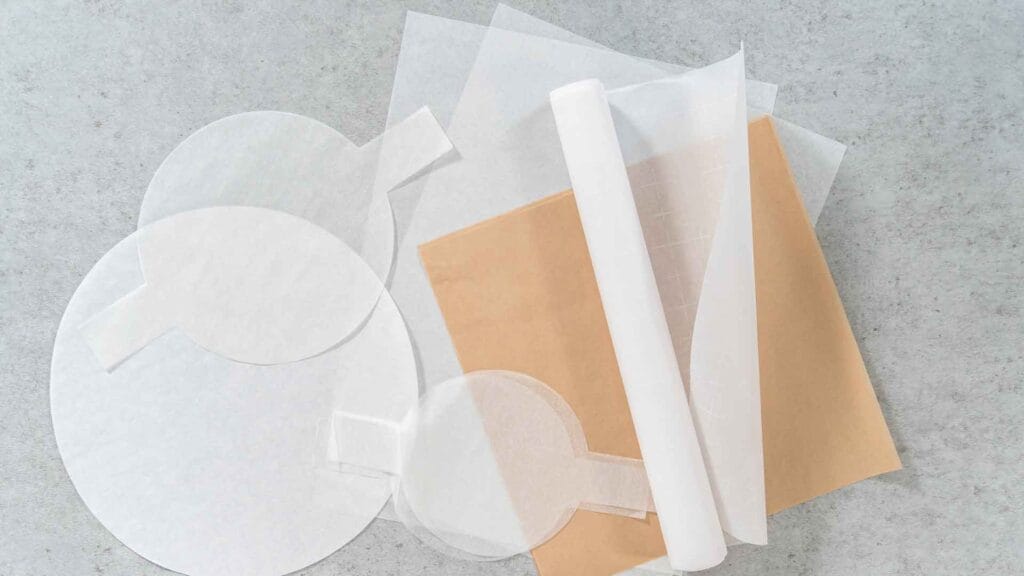
Custom filter paper rolls can improve efficiency in several practical ways.
First, they reduce fitting problems. When the roll width and core size match the equipment, installation becomes easier and operators spend less time adjusting the media.
Second, they reduce waste. Standard rolls may need trimming if the width does not match the machine. Custom sizing can reduce unnecessary cutting and leftover material.
Third, they improve process stability. When the same paper grade and roll specification are used consistently, filtration speed and replacement intervals become more predictable.
Fourth, they support high-volume operation. Roll format is convenient for continuous filtration systems where frequent manual sheet replacement would slow production.
Fifth, they simplify purchasing. Once the correct specification is approved, repeat orders become easier for both the buyer and supplier.
Common Mistakes When Ordering Custom Filter Paper Rolls
Many filtration problems begin during the inquiry stage. Buyers may send incomplete information, and suppliers may have to guess.
Common mistakes include:
Choosing only by roll width
Width is important, but it does not describe filtration performance. The paper grade, thickness, retention, flow, and strength also matter.
Assuming thicker paper is always better
Thicker paper may hold more dirt in some cases, but it can also slow filtration. Structure matters more than appearance.
Ignoring the liquid type
Water-based liquids, oil-based liquids, solvents, and chemical solutions may require different paper properties.
Forgetting the core diameter
Even if the paper grade is correct, the roll may not fit the equipment if the core size is wrong.
Not testing samples
A specification that looks correct on paper should still be tested under real operating conditions.
Using one roll for every application
A factory may need different rolls for oil, coolant, chemical liquid, or laboratory filtration.
Not checking batch consistency
Industrial users need stable performance across repeat orders, not just one acceptable shipment.
What Information Should Buyers Provide?
A clear inquiry helps the supplier recommend the right custom filter paper rolls faster.
Buyers should provide:
| Information Needed | Why It Matters |
| Filtered liquid | Determines compatibility and flow behavior |
| Main contaminants | Helps choose retention and dirt-holding capacity |
| Roll width | Ensures correct machine fit |
| Roll length | Affects replacement and handling |
| Core inner diameter | Ensures installation compatibility |
| Equipment type | Helps evaluate pressure, support, and feeding method |
| Operating temperature | Affects liquid viscosity and paper behavior |
| Current problem | Helps the supplier solve the real issue |
| Required quantity | Supports production and packaging planning |
| Sample requirement | Allows testing before bulk order |
A good inquiry may look like this:
“We need custom filter paper rolls for coolant filtration in a machining workshop. The liquid contains metal fines and grinding residue. Required roll width is 800 mm, core inner diameter is 76 mm, and the current paper tears during operation. Please recommend a paper grade with better wet strength and stable flow.”
This type of information allows the supplier to provide a more accurate recommendation.
For support with roll sizing and paper grade selection, you can contact us through the contact page.
Quality Control Points for Custom Filter Paper Rolls
For industrial users, quality control is just as important as the initial specification. A filter paper roll must perform consistently across different batches.
Important quality control points include:
- Consistent roll width
- Stable paper thickness
- Uniform surface formation
- Reliable wet strength
- Controlled roll winding
- Clean packaging
- Accurate core size
- Low fiber shedding
- Stable filtration speed
- Repeatable performance between orders
Many industrial buyers also consider supplier quality management. Quality systems such as ISO 9001 are widely used as a reference for consistent process control and customer-focused quality management.
A reliable supplier should be able to discuss not only paper size but also filtration performance, customization options, packaging, and repeat-order consistency.
How to Test Custom Filter Paper Rolls Before Bulk Ordering
Before placing a bulk order, sample testing is strongly recommended. A test should use the actual liquid, actual equipment, and actual operating conditions.
During testing, check:
Filtration speed
Does the liquid pass through smoothly without slowing too quickly?
Particle retention
Does the filtered liquid meet your clarity or cleanliness expectations?
Paper strength
Does the paper tear, deform, or soften during operation?
Roll feeding
Does the roll unwind smoothly without wrinkles or breakage?
Equipment fit
Does the roll width match the machine correctly?
Replacement interval
Does the paper last long enough for your workflow?
Used paper condition
Does the used paper show even loading, or are there signs of bypass and uneven flow?
Testing can reveal problems that are not visible from technical descriptions alone. It is better to adjust the paper grade, width, or roll format before bulk production than to discover problems after the order arrives.
Storage and Handling Tips for Better Roll Performance
Even a suitable filter paper roll can perform poorly if stored or handled incorrectly.
Keep rolls in a clean, dry place. Avoid direct moisture, dust, oil stains, and chemical vapor before use. Store rolls upright or according to packaging guidance to prevent deformation. Do not crush the roll edges. Keep packaging closed until the roll is needed. During installation, make sure the roll is aligned with the equipment and not under excessive tension.
Operators should also avoid touching the filtration surface with dirty hands or tools. If the paper is damaged before use, filtration results may become unstable.
Good storage and handling help protect the paper structure and reduce preventable problems during operation.
Why Supplier Experience Matters for Custom Filter Paper Rolls
Custom filter paper rolls require more communication than standard products. A supplier should understand both paper manufacturing and practical filtration requirements.
An experienced custom filter paper supplier can help buyers:
- Confirm roll width and core size
- Select a suitable paper grade
- Balance retention and flow rate
- Improve wet strength for difficult applications
- Reduce unnecessary trimming and waste
- Support sample testing before bulk supply
- Maintain consistent repeat orders
- Adjust specifications when the filtration process changes
Fushun Civil Affairs Filter Paper Factory supplies industrial filter paper products for oil filtration, liquid filtration, laboratory use, and custom filtration needs. Our product range includes industrial filter paper, qualitative analysis filter paper, quantitative analysis filter paper, and lens cleaning paper.
To discuss custom filter paper rolls for your equipment, visit our large industrial filter paper page or send your roll specifications through the contact page.
Conclusion
Custom filter paper rolls can make industrial filtration more stable, efficient, and easier to manage when they are specified correctly. The right roll should match the filtered liquid, contamination type, equipment width, core size, filtration speed, wet strength requirement, and replacement process.
Buyers should not choose filter paper rolls by width alone. Roll format, paper structure, flow rate, particle retention, wet strength, dirt-holding capacity, and batch consistency all affect real performance.
Before bulk ordering, test samples under actual operating conditions. Check flow, clarity, strength, roll feeding, equipment fit, and replacement interval. A well-matched custom filter paper roll can reduce downtime, improve filtration consistency, and support long-term purchasing efficiency.
For custom sizing, product selection, or sample discussion, contact our team with your liquid type, equipment details, roll width, core size, and current filtration problem.
FAQ
What are custom filter paper rolls used for?
Custom filter paper rolls are used for industrial liquid filtration, including oil filtration, coolant filtration, chemical liquid filtration, filter press operation, and process filtration where roll width or paper grade needs to match specific equipment.
What information is needed to customize filter paper rolls?
You should provide the filtered liquid, main contaminants, roll width, roll length, core diameter, equipment type, operating conditions, current filtration problem, and expected performance requirements.
Are custom filter paper rolls better than standard rolls?
They can be better when standard rolls do not fit your equipment or filtration needs. Custom rolls help improve fit, reduce trimming, support stable flow, and make repeat purchasing easier.
How do I choose the right roll width?
Choose the roll width based on your filtration equipment, filter bed, or machine feeding system. The paper should cover the filtration area properly without excessive trimming, wrinkling, or bypass.
Is thicker filter paper always better?
No. Thickness alone does not determine filtration performance. Flow rate, particle retention, wet strength, fiber structure, and liquid compatibility are more important.
Can custom filter paper rolls be used for oil filtration?
Yes. Custom filter paper rolls can be used for oil filtration when the paper grade matches the oil viscosity, particle load, flow rate, and filtration equipment.
Do you support bulk supply of custom filter paper rolls?
Yes. Custom roll width, roll length, core size, paper grade, and packaging can be discussed based on your industrial filtration application and purchasing needs. You can send your requirements through the contact page.